
A SaaS data team is asked to reduce warehouse spend by a third. They spend six weeks tuning queries, adjusting clustering, and rightsizing warehouses, and get it down by eleven percent. What the exercise does not touch is the two thousand model dbt project running hourly, of which roughly a quarter feed nothing anyone reads, because pruning that requires knowing which models have consumers and nobody has that list.
The optimisation work was competent. It addressed the compute layer while the cost driver sat in the orchestration layer, running work nobody asked for.
Most warehouse spend is not inefficient queries. It is work running for consumers who no longer exist.
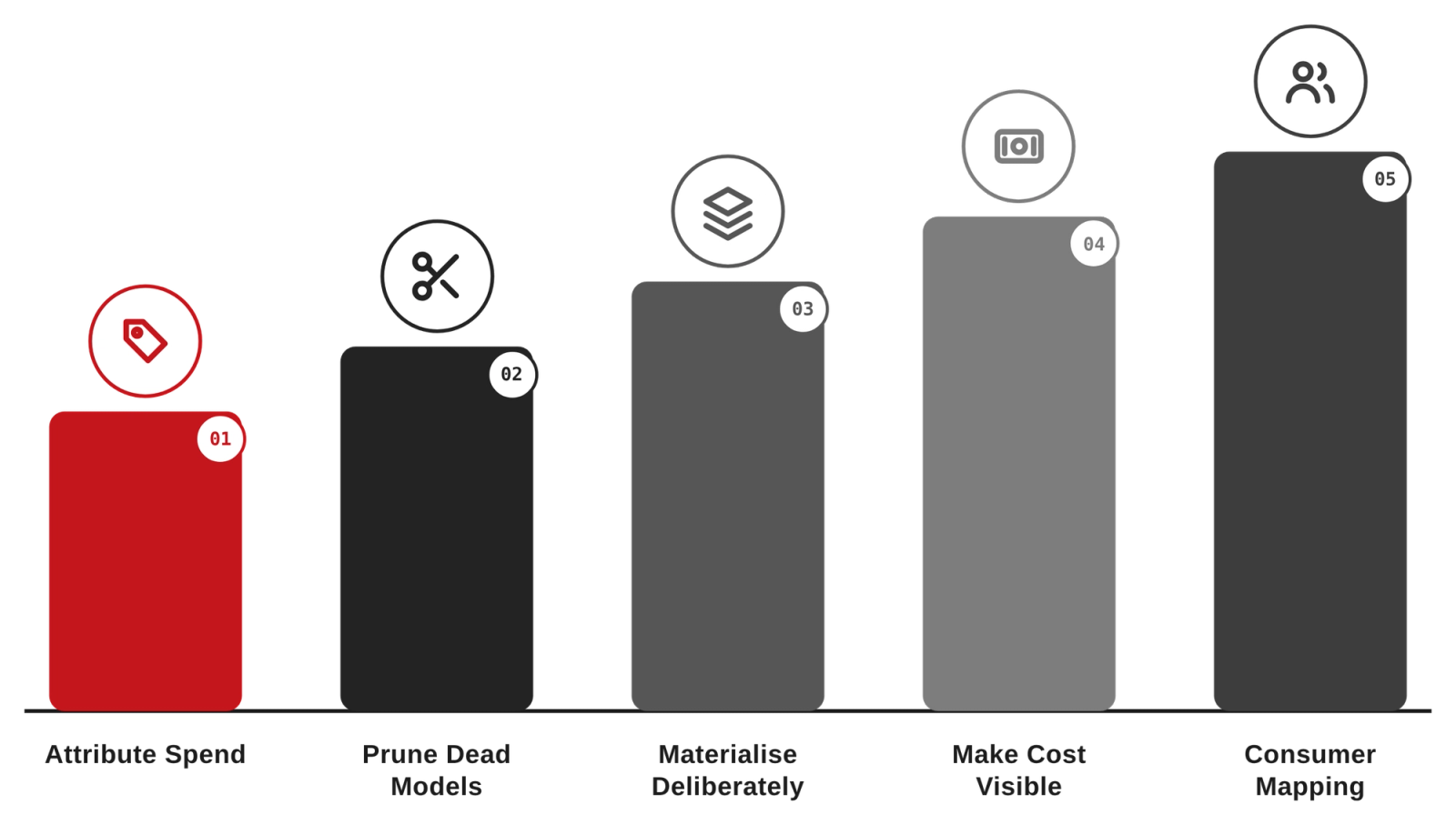
Warehouse cost optimization for SaaS means attributing spend to consumers and models, pruning work nobody consumes, choosing materialisation deliberately, and making cost visible to the teams whose requests create it.
How a Healthcare CIO Cut AI Model Cost 60% Without Losing Accuracy
Cut AI inference costs while preserving the accuracy healthcare demands.
However, most efforts start with query tuning because it is measurable and technical, which addresses the smaller half of the problem.
If you are a CDO or VP of Data at a SaaS company, the intent of this article is:
- Define attribution as the prerequisite for any real reduction
- Show why unconsumed scheduled work is the dominant cost
- Lay out how to make cost visible to the teams creating it
To do that, let's start with the basics.
What Is Warehouse Cost Optimization for SaaS? The Basic Definition
At a high level, warehouse cost optimization means reducing the compute and storage spend of your analytical platform without reducing what it delivers. The spend has three sources: scheduled transformation work, ad hoc and dashboard queries, and storage.
In a multi-team SaaS estate the largest reducible component is usually scheduled transformation running on models with no live consumers, because a dbt project grows continuously and nothing prunes it. Query tuning addresses the second component and rarely moves the total much, which is why cost programmes that start there deliver single-digit improvements and stall.
To compare:
Optimising queries while running unconsumed models hourly is tuning the engine of a van that is driving an empty route four times a day. The tuning works. The route is the cost.
Nobody cancels the route because the manifest listing who ordered the deliveries was never maintained, and cancelling something that might be needed feels riskier than paying for it.
Why Does Warehouse Cost Optimization Matter for SaaS?
Issues that it addresses or resolves:
- Scheduled work running for consumers who no longer exist
- Spend unattributable to teams or models
- Materialisation choices made once and never revisited
Resolved Issues by Optimization Done Well
- Unconsumed work identified and stopped
- Spend attributable to models and consuming teams
- Materialisation matched to actual query patterns
Core Components of Warehouse Cost Optimization in SaaS
- Query and job attribution to models and teams
- Consumer identification per model
- Pruning of unconsumed scheduled work
- Materialisation choices reviewed against query patterns
- Cost visible to the teams generating it
Modern Cost Optimization Tooling for SaaS
- Query attribution from warehouse metadata
- Model usage tracking from query logs
- Lineage identifying downstream consumers
- Materialisation cost comparison per model
- Team level cost reporting
These tools make reduction possible. Model usage tracking joined to lineage is what turns pruning from a risky guess into an evidenced decision.
Other Core Issues They Will Solve
- Scheduled work matched to real demand
- Teams making requests with cost awareness
- Storage growth decided rather than inherited
In Summary: Warehouse cost optimization for SaaS depends on attributing spend and identifying unconsumed work, not primarily on query tuning.
Importance of Warehouse Cost Optimization for SaaS in 2026
Data platform spend is under scrutiny and grows structurally. Four reasons explain why this matters now.
1. Model counts grow and nothing prunes them.
A project accumulates models continuously because deleting something that might be used feels risky.
2. Scheduled work dominates spend.
Hourly transformation across a large project costs more than ad hoc querying in most estates.
3. Requesting teams see no cost.
A team asking for an hourly refresh experiences no consequence, so requests skew toward frequency.
4. Query tuning has a low ceiling.
It is measurable and technical, which is why it absorbs effort, and it rarely moves the total materially.
Traditional vs. Modern SaaS Warehouse Cost Control
- Query tuning first vs. attribution and pruning first
- Spend unattributed vs. attributed to models and teams
- Refresh frequency by request vs. matched to consumption
- Materialisation set once vs. reviewed against query patterns
In summary: A modern SaaS approach attributes spend, prunes unconsumed work, and shows cost to the teams whose requests create it.
Details About the Core Components of Warehouse Cost Optimization in SaaS: What Are You Designing?
Let's go through each component.
1. Attribution Layer
Where spend comes from.
Attribution decisions:
- Query cost attributed to models and jobs
- Jobs attributed to owning teams
- Ad hoc spend attributed to users
2. Consumption Layer
Who reads the output.
Consumption decisions:
- Model usage tracked from query logs
- Downstream consumers identified via lineage
- Zero-consumer models flagged
3. Pruning Layer
Stopping unneeded work.
Pruning decisions:
- Unconsumed models paused before deletion
- Refresh frequency matched to consumption
- Deprecation with consumer notification
4. Materialisation Layer
How output is stored.
Materialisation decisions:
- Table, view, and incremental chosen per query pattern
- Choices revisited as usage changes
- Cost compared rather than assumed
5. Visibility Layer
Cost where requests happen.
Visibility decisions:
- Team level cost reported
- Refresh frequency cost shown at request time
- Trends reviewed with teams
Benefits Gained from Warehouse Cost Optimization in SaaS
- Spend reduced by stopping work nobody consumes
- Refresh frequency matched to real demand
- Teams requesting with awareness of cost
How It All Works Together
The SaaS data team builds attribution before touching a single query, because reduction without attribution is guesswork. Warehouse metadata is used to attribute cost to specific models and jobs, jobs to owning teams, and ad hoc spend to users, which immediately reveals that a small number of models account for a large share of scheduled cost.
Model usage is then tracked from query logs and joined to lineage, producing a list of models with no downstream consumers and no direct queries, which is typically a substantial fraction of a mature project.
Those are paused rather than deleted first, so anything that breaks surfaces within a cycle and can be restored, which removes the fear that stops pruning happening at all. Refresh frequency is matched to consumption rather than to the request that created it, since a model read once a day does not need hourly rebuilds.
Materialisation is revisited per model against actual query patterns. And cost is reported at team level with the cost of a refresh frequency shown at request time, which changes what teams ask for.
Common Misconception
Reducing warehouse cost means making queries more efficient.
Query efficiency is worth having and it is the smaller lever in most estates. The dominant reducible spend is scheduled transformation running on models nobody consumes, which no amount of tuning addresses because the work should not be running at all.
Query tuning attracts effort because it is technical, measurable, and does not require asking anyone whether they still use something. Pruning requires a consumer list and a willingness to pause things, both of which are organisational rather than technical, which is exactly why they get deferred.
Teams that start with tuning typically deliver a single-digit reduction and conclude the platform is efficient, when a quarter of the compute is producing output nobody reads.
Key Takeaway: The largest reducible cost is work running for consumers who no longer exist. Tuning cannot fix work that should not run.
Real-World Warehouse Cost Optimization for SaaS in Action
Let's take a look at how it operates with a real-world example.
We worked with a SaaS data team asked to cut spend by a third who had achieved eleven percent through tuning, with these constraints:
- Attribute spend to models and teams before optimising
- Identify and pause unconsumed scheduled work
- Show cost to the teams whose requests create it
Step 1: Attribute the Spend
Before optimising.
- Cost attributed to models and jobs
- Jobs attributed to owning teams
- Ad hoc spend attributed to users
Step 2: Find the Unconsumed
Usage plus lineage.
- Model usage tracked from query logs
- Downstream consumers identified
- Zero-consumer models listed
Step 3: Pause, Then Prune
Reversible first.
- Unconsumed models paused
- Breakage surfaced within a cycle
- Deletion after a quiet period
Step 4: Match Frequency to Demand
Not to the request.
- Refresh frequency aligned to consumption
- Hourly justified rather than assumed
- Cost of frequency shown
Step 5: Report Cost to Teams
Where requests originate.
- Team level cost reported
- Frequency cost shown at request
- Trends reviewed with teams
Where It Works Well
- Mature projects with accumulated unconsumed models
- Estates where usage can be tracked from query logs
- Teams willing to pause work reversibly
Where It Does Not Work Well
- Programmes starting with query tuning
- Estates with no usage tracking to evidence pruning
- Cost reported centrally with no team visibility
Key Takeaway: Attribute, find the unconsumed, pause reversibly, match frequency to demand, and show teams their cost.
Common Pitfalls
i) Starting with query tuning
It is measurable and technical and addresses the smaller lever, which is why cost programmes stall at single-digit reductions. Attribute and prune first.
- Effort produces a small reduction
- The estate is declared efficient
- A quarter of compute still produces unread output
ii) Pruning without evidence
Deleting models on suspicion produces breakage and a permanent reluctance to prune again. Track usage, join lineage, and pause before deleting.
iii) Frequency inherited from the request
A model asked for hourly in a project two years ago is still rebuilding hourly. Match frequency to actual consumption.
iv) Cost invisible to requesters
A team asking for hourly refresh experiences no consequence. Show the cost of frequency at the point of request.
Takeaway from these lessons: Attribution enables pruning, pruning delivers the reduction, and visibility prevents the regrowth.
Warehouse Cost Best Practices for SaaS: What High-Performing Teams Do Differently
1. Attribute before optimising
Know which models and teams generate the spend, because reduction without attribution is guesswork with a report attached.
2. Evidence pruning with usage and lineage
Produce a list of zero-consumer models rather than a suspicion, which is what makes pausing them politically possible.
3. Pause before deleting
Make the first step reversible so breakage surfaces safely, which removes the fear that prevents pruning entirely.
4. Match refresh frequency to consumption
Stop rebuilding hourly for a model read once a day, and require justification for high frequency.
5. Show cost where requests are made
Report team level spend and display the cost of a refresh frequency at request time.
Logiciel's value add is helping SaaS data teams attribute warehouse spend, identify unconsumed work, and make cost visible to requesting teams so reductions hold.
Takeaway for High-Performing Teams: Attribute, evidence, pause, match frequency, and make cost visible where requests happen.
Signals You Are Doing Warehouse Cost Optimization Well in SaaS
How do you know it is working? Not by query efficiency, but by whether unconsumed work has stopped. These are the signals that separate reduction from tuning.
Spend is attributed. You can name the models and teams generating cost.
Zero-consumer models are known. There is a list, refreshed regularly.
Work gets paused. Pruning happens because it is reversible.
Frequency matches demand. Hourly rebuilds require justification.
Teams see their cost. Spend is reported where requests originate.
Adjacent Capabilities and Connected Work
This work does not exist in isolation. Cost optimization depends on, and feeds into, the surrounding data platform. Ignoring the adjacencies is the most common scoping mistake.
dbt practice determines model ownership and deletion authority. Lineage supplies consumer identification. Clickstream and event volume drive storage growth. FinOps guardrails supply the broader cost discipline. Naming these adjacencies upfront keeps the work scoped and helps leadership see attribution as the prerequisite.
The common mistake is treating each adjacency as someone else's problem. The attribution is your problem. The consumer list is your problem. The team visibility is your problem. Pretend otherwise and you will tune queries while a quarter of your compute produces output nobody reads.
Own the adjacencies you depend on, partner with the teams that hold them, and share the numbers.
Conclusion
Warehouse cost reduction in a multi-team SaaS estate is mostly a pruning problem wearing a tuning costume. The dominant reducible spend is scheduled transformation running on models with no live consumers, accumulated because a project grows continuously and deleting something that might be used feels riskier than paying for it.
Attribute spend to models and teams first, join usage tracking to lineage to produce an evidenced list of zero-consumer models, pause them rather than deleting so the first step is reversible, match refresh frequency to actual consumption rather than to the request that created it, and report cost to the teams whose requests generate it.
Key Takeaways:
- The largest reducible spend is scheduled work for consumers who no longer exist
- Pruning needs evidence from usage plus lineage, and pausing before deletion
- Cost visibility at the point of request is what stops the regrowth
Reducing warehouse cost requires attribution first. When done correctly, it produces:
- Spend reduced by stopping unconsumed work
- Refresh frequency matched to real demand
How the Lakehouse Ends the Warehouse-vs-Lake Trade-Off
Understand how lakehouses reduce the trade-off between cost and flexibility.
- Materialisation matched to query patterns
- Teams requesting with awareness of cost
What Logiciel Does Here
If query tuning got you eleven percent and you need a third, we help you attribute spend, evidence which models nobody consumes, and make cost visible to requesting teams.
Learn More Here:
- dbt at Scale for Technology & SaaS
- FinOps Guardrails for Technology & SaaS
- Clickstream Analytics and Storage Tiering
At Logiciel Solutions, we work with SaaS data leaders on platform cost. Our reference patterns come from large multi-team dbt estates.
Book a technical deep-dive on finding the compute nobody is consuming.