
A SaaS platform team adds AI assistance to their reliability practice, and the first thing it does well is assemble incident context: recent deploys, dependency health, error rate changes, similar past incidents.
Time to first useful hypothesis drops noticeably. Then someone wires it to suggest remediations, and during a real incident it confidently recommends a rollback for a service whose problem was upstream, which an engineer follows because it was three in the morning and the suggestion arrived with plausible reasoning attached.
The context assembly was the valuable part. The suggestion was the part that cost forty minutes.
Assembling context is reliably useful. Suggesting action is reliably confident, which is a different thing.
AI-assisted SRE for SaaS means automating the diagnostic context assembly that consumes most incident time, while keeping remediation judgement with humans, so reliability practice scales across thirty teams without importing confident wrong suggestions into incidents.
The State of AI-Assisted Engineering 2026: Adoption Is Basically Total
Understand near-total AI adoption and what it changes for engineering.
However, most adoptions move quickly from context to recommendation, which is where the value stops improving and the risk starts.
If you are a VP of Engineering or Head of Infrastructure at a SaaS company, the intent of this article is:
- Define which part of SRE work AI reliably improves
- Show why suggestion quality is the wrong thing to optimise
- Lay out how to scale reliability practice across many teams
To do that, let's start with the basics.
What Is AI-Assisted SRE for SaaS? The Basic Definition
At a high level, AI-assisted SRE means using automation and pattern recognition to support reliability work: assembling incident context, surfacing similar past incidents, drafting timelines, summarising for handover, and identifying candidate correlations.
The distinction that matters is between assembly and judgement. Assembling what an engineer would have gathered manually is mechanical, verifiable, and consumes most of the minutes in a typical incident. Deciding what to do about it requires understanding the system's current state and business context, and a suggestion delivered with confident reasoning at three in the morning gets followed whether or not it is right.
To compare:
Context assembly is a research assistant who arrives with every relevant document already on the desk. Suggestion is that assistant also telling you what to conclude. The first is unambiguously useful and its output can be checked at a glance.
The second is useful when correct and expensive when wrong, and the person receiving it at three in the morning is not well positioned to tell which.
Why Does AI-Assisted SRE Matter for SaaS?
Issues that it addresses or resolves:
- Most incident time spent assembling context manually
- Reliability practice not scaling across thirty teams
- Past incident knowledge unavailable when it would help
Resolved Issues by AI-Assisted SRE Done Well
- Context assembled before a human starts diagnosing
- Similar past incidents surfaced automatically
- Toil reduced without importing confident suggestions
Core Components of AI-Assisted SRE in SaaS
- Automated context assembly on incident open
- Similar incident retrieval from history
- Timeline and handover drafting
- Judgement boundaries stated explicitly
- Suggestion capability deliberately constrained
Modern AI-Assisted SRE Tooling for SaaS
- Context assembly from observability, deploy, and dependency data
- Historical incident search with similarity retrieval
- Automated timeline construction during incidents
- Handover summaries for shift changes
- Postmortem drafting from incident artefacts
These tools remove toil safely. Context assembly on incident open is the highest-value component and the one with almost no downside.
Other Core Issues They Will Solve
- Faster time to first useful hypothesis
- Handovers that preserve context across shifts
- Postmortems written while details are fresh
In Summary: AI-assisted SRE for SaaS automates context assembly, retrieval, and documentation, and it works when remediation judgement stays with humans.
Importance of AI-Assisted SRE for SaaS in 2026
Reliability practice scales badly as service count grows. Four reasons explain why this matters now.
1. Context assembly dominates incident time.
Most minutes go to gathering dashboards, deploys, and dependency state rather than to deciding.
2. Service count exceeds anyone's mental model.
Across thirty teams no responder knows every service, which makes automated context more valuable, not less.
3. Past incidents are unsearchable in practice.
Similar problems recur and the previous resolution sits in a document nobody finds under pressure.
4. Confident suggestions get followed.
A recommendation with plausible reasoning at three in the morning is acted on, which makes suggestion quality a risk rather than a feature.
Traditional vs. Modern SaaS Reliability Practice
- Context gathered manually vs. assembled on incident open
- Past incidents unfindable vs. surfaced by similarity
- Timelines reconstructed later vs. built during the incident
- Suggestions trusted vs. judgement kept with humans
In summary: A modern SaaS approach automates assembly and documentation while leaving diagnosis and remediation decisions to people.
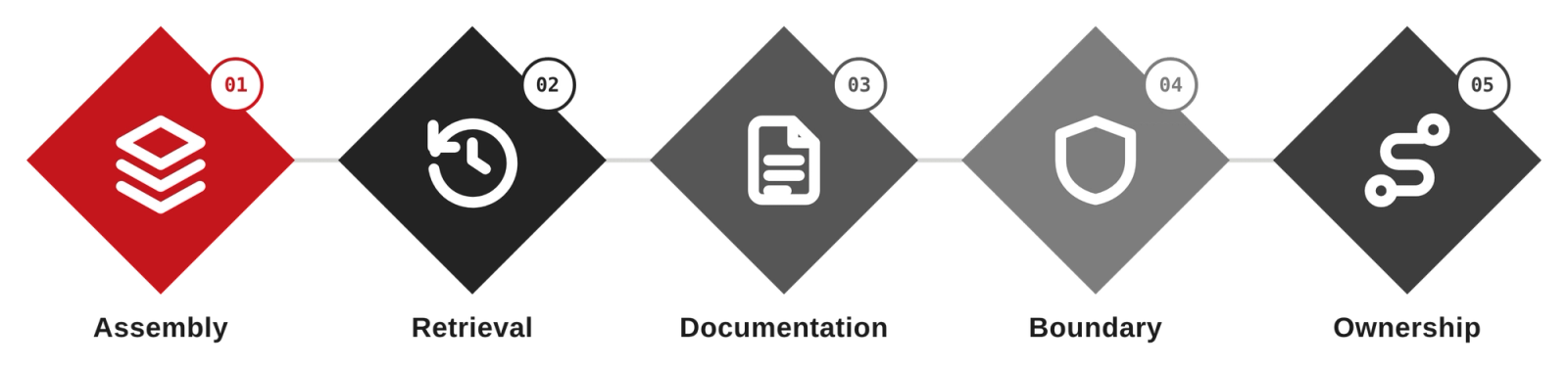
Details About the Core Components of AI-Assisted SRE in SaaS: What Are You Designing?
Let's go through each component.
1. Assembly Layer
Context before diagnosis.
Assembly decisions:
- Sources assembled automatically on open
- Recent deploys and dependency state included
- Read-only by construction
2. Retrieval Layer
What happened before.
Retrieval decisions:
- Similar incidents surfaced by similarity
- Previous resolutions linked
- Relevance monitored rather than assumed
3. Documentation Layer
Timeline and handover.
Documentation decisions:
- Timeline built during the incident
- Handover summaries generated at shift change
- Postmortem drafted from artefacts
4. Boundary Layer
Where judgement stays.
Boundary decisions:
- Remediation suggestions constrained or absent
- Diagnosis of novel failures left to humans
- Boundary stated explicitly to responders
5. Ownership Layer
Reaching the right team.
Ownership decisions:
- Service ownership resolved from the catalog
- Context routed with the incident
- Unowned services flagged
Benefits Gained from AI-Assisted SRE in SaaS
- Time to first hypothesis reduced materially
- Past incident knowledge available under pressure
- Documentation produced while details are fresh
How It All Works Together
The SaaS platform team automates the mechanical work and draws the judgement boundary explicitly. On incident open, context is assembled automatically: recent deploys to the affected service and its dependencies, error rate and latency changes, dependency health, active alerts grouped by relationship, and ownership resolved from the catalog.
That assembly is read-only by construction, which is why it carries almost no risk and removes the largest share of incident minutes. Similar past incidents are surfaced by similarity with previous resolutions linked, which matters more in a thirty-team estate because no responder knows every service and the previous fix is frequently in a document they would never find.
A timeline is built during the incident rather than reconstructed afterwards, handover summaries generate at shift change, and a postmortem draft assembles from those artefacts while details are fresh. Remediation suggestion is constrained deliberately or absent entirely, and the boundary is stated to responders so nobody expects the system to decide.
Common Misconception
Better suggestions are the point, so improving suggestion quality is where the value is.
Suggestion quality improves and the failure mode does not change. A recommendation arriving with plausible reasoning during an incident at three in the morning gets followed, because the responder is under time pressure, possibly unfamiliar with the service, and the suggestion looks considered.
When it is right that saves time. When it is wrong it costs the forty minutes spent rolling back the wrong service plus the confidence lost afterwards. Meanwhile context assembly, which is mechanical and verifiable, delivers most of the available time saving with essentially no downside.
Teams that push quickly from assembly into recommendation are trading a reliable benefit for a variable one, and the variable one is evaluated by a tired human who cannot easily check it.
Key Takeaway: Context assembly is verifiable and saves most of the time. Suggestions are confident and evaluated by someone at three in the morning.
Real-World AI-Assisted SRE for SaaS in Action
Let's take a look at how it operates with a real-world example.
We worked with a SaaS platform team whose AI suggestion sent a responder to roll back the wrong service, with these constraints:
- Automate context assembly as the primary capability
- Surface similar past incidents with resolutions
- State the judgement boundary explicitly
Step 1: Assemble Context on Open
Read-only.
- Deploys, dependency state, and error changes gathered
- Ownership resolved from the catalog
- Assembly read-only by construction
Step 2: Retrieve Similar Incidents
With resolutions.
- Similarity retrieval over incident history
- Previous resolutions linked
- Relevance monitored
Step 3: Document During the Incident
Not afterwards.
- Timeline built live
- Handover summaries at shift change
- Postmortem drafted from artefacts
Step 4: State the Boundary
Explicitly.
- Suggestion constrained or absent
- Novel diagnosis left to humans
- Boundary communicated to responders
Step 5: Route With Context
To the owning team.
- Ownership resolved automatically
- Context routed with the incident
- Unowned services flagged
Where It Works Well
- Context assembly, which is mechanical and read-only
- Estates where no responder knows every service
- Documentation produced during rather than after incidents
Where It Does Not Work Well
- Remediation suggestion during live incidents
- Diagnosis of novel failures
- Estates with no incident history to retrieve from
Key Takeaway: Automate assembly, retrieval, and documentation; leave diagnosis and remediation with people.
Common Pitfalls
i) Moving quickly to suggestion
A confident recommendation at three in the morning gets followed, and when wrong it costs more than the assembly saved. Constrain suggestion deliberately.
- Responders act on plausible reasoning
- A wrong rollback costs forty minutes
- Trust in the whole capability drops afterwards
ii) Assembly that can act
Anything gathering context should be read-only by construction, so the lowest-risk component stays low-risk.
iii) Unmonitored retrieval relevance
Similar incident retrieval that surfaces irrelevant history trains responders to ignore it. Monitor relevance rather than assuming it.
iv) Documentation deferred
A timeline reconstructed a week later loses the detail that made it useful. Build it during the incident.
Takeaway from these lessons: The reliable value is mechanical, and the boundary between assembly and judgement is where the risk sits.
AI-Assisted SRE Best Practices for SaaS: What High-Performing Teams Do Differently
1. Automate context assembly first
It is mechanical, read-only, verifiable, and consumes most incident minutes, which makes it the highest-value low-risk component.
2. Keep assembly read-only by construction
Do not let the lowest-risk capability acquire action permissions it does not need.
3. Surface past incidents with resolutions
In a thirty-team estate the previous fix is frequently the answer, and nobody will find it manually under pressure.
4. Document during the incident
Build timelines live and generate handover summaries at shift change, because reconstruction loses what mattered.
5. State the judgement boundary to responders
Make clear what the system will and will not decide, so nobody expects a recommendation to be a conclusion.
Logiciel's value add is helping SaaS platform teams automate the mechanical majority of incident work while keeping diagnosis and remediation judgement with the people accountable for it.
Takeaway for High-Performing Teams: Assemble context, retrieve history, document live, keep assembly read-only, and state the boundary.
Signals You Are Doing AI-Assisted SRE Well in SaaS
How do you know it is working? Not by suggestion accuracy, but by time to first hypothesis and whether documentation exists. These are the signals that separate useful assistance from confident interference.
Context arrives first. Responders start from assembled context rather than gathering it.
History surfaces. Similar incidents and their resolutions appear automatically.
Documentation exists. Timelines and handovers are produced during incidents.
Assembly is read-only. Nothing gathering context can act.
The boundary is known. Responders know what the system does not decide.
Adjacent Capabilities and Connected Work
This work does not exist in isolation. AI-assisted SRE depends on, and feeds into, the surrounding platform. Ignoring the adjacencies is the most common scoping mistake.
Observability supplies the data assembled. The service catalog supplies ownership. Runbook automation handles proven remediations with preconditions. AIOps supplies alert correlation feeding incident open. Naming these adjacencies upfront keeps the work scoped and helps leadership see assembly as the deliverable.
The common mistake is treating each adjacency as someone else's problem. The assembly quality is your problem. The retrieval relevance is your problem. The judgement boundary is your problem. Pretend otherwise and a responder will follow a confident suggestion at three in the morning.
Own the adjacencies you depend on, partner with the teams that hold them, and share the boundary.
Conclusion
AI helps reliability practice most in the part nobody finds interesting. Assembling recent deploys, dependency health, error rate changes, active alerts, and similar past incidents is mechanical, read-only, verifiable at a glance, and consumes the majority of minutes in a typical incident, which makes it the highest-value change available.
Suggestion is where the value plateaus and the risk begins, because a recommendation delivered with plausible reasoning to a tired responder unfamiliar with the service gets followed. Automate the assembly, surface the history, document during the incident rather than afterwards, and state clearly what the system does not decide.
Key Takeaways:
- Context assembly delivers most of the time saving with almost no downside
- Confident suggestions get followed by responders poorly placed to check them
- In a thirty-team estate, past incident retrieval matters more than in a small one
Adopting AI-assisted SRE well requires a clear boundary. When done correctly, it produces:
- Time to first hypothesis reduced materially
- Past incident knowledge available under pressure
Why Engineering Is Heading Toward Agent-to-Agent, Not Just AI-Assisted
Explore how connected agents reshape engineering beyond AI-assisted development.
- Documentation produced while details are fresh
- Judgement remaining with the people accountable for it
What Logiciel Does Here
If your AI assistant is suggesting remediations rather than assembling context, we help you rebalance toward the mechanical work and state the judgement boundary clearly.
Learn More Here:
- AI Incident Management for Technology & SaaS
- Runbook Automation for Technology & SaaS
- OpenTelemetry for Technology & SaaS
At Logiciel Solutions, we work with SaaS engineering leaders on reliability practice. Our reference patterns come from estates serving many product teams.
Book a technical deep-dive on automating the mechanical majority of incident work.