
Zeme · Real Estate
Real Estate
Cloud infrastructure for general apps is solved. Cloud infrastructure for data and AI workloads - with their network, storage, GPU, and FinOps quirks - is not. Logiciel designs, implements, and operates AWS, Azure, and GCP infrastructure tuned for the data workloads US enterprises actually run.
Now data egress costs more than compute. Network architectures designed without data-workload awareness produce egress costs that exceed compute spend within 18 months.
| Dedicated Pod | Staff Augmentation | Project-Based Delivery |
|---|---|---|
| Embedded data engineering pod aligned to your sprint cadence - typically 3–6 engineers + a US lead. | Senior data engineers, architects, and SMEs slotted into your team to unblock specific work. | Fixed-scope, milestone-driven engagements with clear deliverables and outcomes. |
We map your stack, workloads, team, and constraints in a working session - not an RFP response.
Reference architecture grounded in your reality, with capacity, cost, and migration plans.
Iterative implementation with weekly demos, code reviews, and your team in the loop.
Managed operations or knowledge transfer - your choice. Both with US-aligned coverage.
Continuous tuning of cost, performance, and reliability against measurable SLAs.
Multi-cloud, hybrid, data-workload-tuned architectures.
Terraform, IaC, GitOps - production-grade from day one.
On-prem to cloud, cloud-to-cloud, with parity validation.
Spend attribution, anomaly detection, optimization.
24/7 ops with US-aligned escalation paths.
SOC 2, HIPAA, GDPR, FedRAMP, GovCloud.


Teams that needed to ship fast, and did. Here's what partnering with Logiciel felt like from the inside.
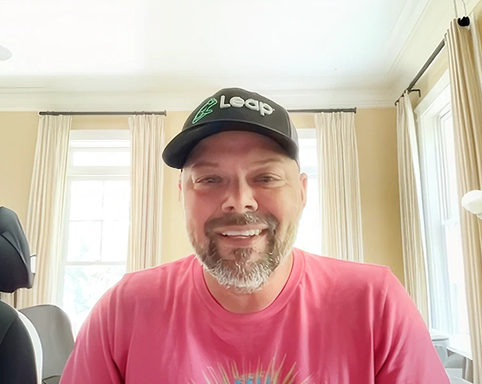
I would highly recommend them to anyone looking to scale quickly or needing support in engineering, product, or QA.
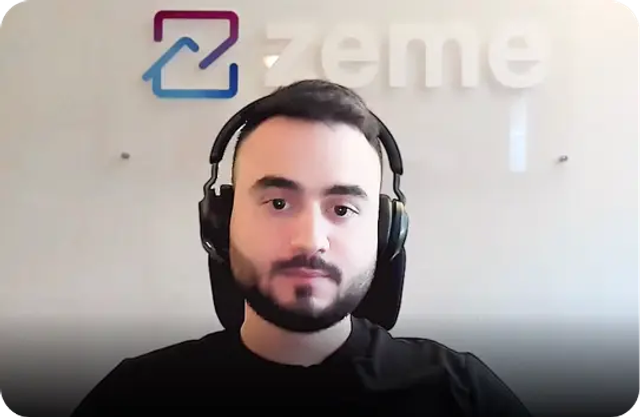
We don't just call them Logiciel; they're part of the Zeme team. Within the first week they were contributing meaningfully to our codebase.

The Logiciel team worked tirelessly and built everything we needed, with security and best practices across our entire platform. It allowed us to become #1 in our industry, and we couldn't have done it without them.

No - we design, implement, and operate solutions on top of native cloud services. AWS, Azure, and GCP all do compute, storage, networking, and security excellently; replacing any of them is foolish and we don't try.
What we provide is the data-workload-tuned architecture, implementation, and operations on top of native cloud primitives. Native services (S3, Glue, Synapse, BigQuery, IAM, GuardDuty) remain as the underlying foundation. We add the data engineering and AI workload-specific layer that the cloud providers don't ship across one another's boundaries.
We're certified across all three major clouds and credential our principal architects on each annually.
Yes - for both AWS GovCloud and Azure Government, with active references in US Federal-adjacent customers. FedRAMP Moderate and High deployments are supported; we maintain a US-citizen-only engineering pool for customers with citizenship requirements.
CMMC-aligned deployments for defense industrial base customers are available. We don't currently hold an autonomous FedRAMP authorization (the timeline and cost are non-trivial), but we operate under customer FedRAMP boundaries with documented inheritance of controls.
For DoD impact level 5 workloads, we work with prime contractors who hold the authorization. References available under NDA at the appropriate clearance level.
Many of our customers run hybrid configurations, especially regulated industries (financial services with on-prem mainframes, healthcare with on-prem EHR systems, government-adjacent with classified networks). Hybrid customers typically run our control plane in cloud while data planes execute in-region or in-DC, so sensitive data never leaves your perimeter.
Common patterns: cloud-burst for analytical workloads with on-prem operational data, gradual cloud migration with parallel running, multi-region with on-prem secondary, and disaster recovery across cloud and on-prem. We have references in financial services and healthcare with active hybrid deployments at Fortune 500 scale. Hybrid is treated as a first-class pattern, not an exception.
Strong - including reserved capacity strategy, multi-tenant scheduling, ML accelerator type selection (A100, H100, L40S, Inferentia, TPU v4/v5e), and cost optimization for AI/ML workloads. GPU costs are typically the highest line item in AI-native customers' bills; right-sizing and scheduling are high-leverage optimizations.
We provide reference architectures for training (multi-node distributed training, checkpoint-and-resume), inference (batched, real-time, serverless), and fine-tuning workloads. For customers running mixed workloads (training during off-hours, inference 24/7), we design queue-aware scheduling that maximizes utilization. GPU strategy is increasingly central to data infrastructure work in 2026.
Fixed-fee for design and implementation; T&M or fixed-monthly for operations. Architecture engagements run $200K-800K depending on scope (single-cloud, multi-cloud, hybrid). Implementation runs $1M-8M for Fortune 500 scope. Managed operations runs $40K-300K monthly depending on coverage tier (8x5 vs 24/7), workload volume, and US-citizen-only staffing requirements.
Pricing is transparent and benchmarked against equivalent SI pricing (Accenture, Deloitte, Wipro) at evaluation. Fixed-fee structure aligns incentives with delivery, not hours. For customers with predictable scope, we offer outcome-based pricing where outcomes are measurable (e.g., cost reduction percentage).
Yes - under NDA, across financial services, healthcare, PropTech, and AI-native scale-ups. References include both happy-path success stories and recovery scenarios (customers who came to us after failed engagements with other vendors).
For US Federal customers, separate cleared-engagement references at appropriate clearance levels. For AI/ML workloads at scale, references include customers running production GPU workloads at >$500K monthly cloud spend. References are provided during late-stage evaluation (typically after technical fit is established and before commercial commitment), not on first call - both as customer protection and to ensure we provide the most relevant references for your specific scope.
8-12 weeks for design (architecture, capacity model, vendor selection, migration plan, costed roadmap); 3-6 months for implementation (Terraform IaC, GitOps, production cutover, governance, observability). Ongoing for operations (managed or knowledge-transfer-based). For Fortune 500 scope, design extends to 12-16 weeks and implementation to 9-15 months including parity testing and phased cutover.
Most customers start with design and move to implementation. About 30% retain managed operations after implementation, with the rest running self-managed or with retained advisory hours. Timeline is realistic, not optimistic - we don't quote 12-week implementations that take 12 months.
2-week assessment of your current cloud footprint. Output: top 5 cost optimizations, top 3 architectural risks, and a costed modernization roadmap.