
Zeme · Real Estate
Real Estate
Most data catalogs die in their second year - when the project sponsor moves teams and nobody updates entries. Logiciel auto-discovers and auto-maintains the catalog, so stewards spend their time on decisions, not data entry.
launched with executive enthusiasm. Year-1 launch enthusiasm followed by year-2 stewardship turnover is the structural failure mode of manual catalogs, not an execution problem.
70% of entries are stale; engineers Slack the steward instead. Stale catalogs train engineers to bypass them entirely, defeating the original investment.
re-evaluation cycle. Same vendor, different promises. Three-year revaluation cycles with same-vendor different-promises indicate the underlying problem is structural, not vendor-specific.
connects to warehouses, BI, dbt, ML platforms. Auto-discovery across warehouses, BI, dbt, ML platforms eliminates the manual onboarding work that historically derailed catalog projects.
auto-derived, always current. Column-level lineage auto-derived from query logs and dbt manifests stays current as code changes - the only approach that survives at scale.
feeds quality, access control, observability. Active metadata feeding quality, access control, and observability turns the catalog from passive documentation into a working part of the data plane.
curate the 5% that matters; platform handles the rest. Steward workflows for the 5% that matters means humans focus on judgment, not data entry - the only sustainable model.
| Dedicated Pod | Staff Augmentation | Project-Based Delivery |
|---|---|---|
| Embedded data engineering pod aligned to your sprint cadence - typically 3–6 engineers + a US lead. | Senior data engineers, architects, and SMEs slotted into your team to unblock specific work. | Fixed-scope, milestone-driven engagements with clear deliverables and outcomes. |
We map your stack, workloads, team, and constraints in a working session - not an RFP response.
Reference architecture grounded in your reality, with capacity, cost, and migration plans.
Iterative implementation with weekly demos, code reviews, and your team in the loop.
Managed operations or knowledge transfer - your choice. Both with US-aligned coverage.
Continuous tuning of cost, performance, and reliability against measurable SLAs.
Connect, discover, classify - no manual onboarding.
Map business terms to physical data; versioned.
Semantic search, recommendation, certified-asset workflows.
Cross-system, auto-derived.
PII, sensitivity, retention - applied via metadata.
Programmatic access for downstream tools.
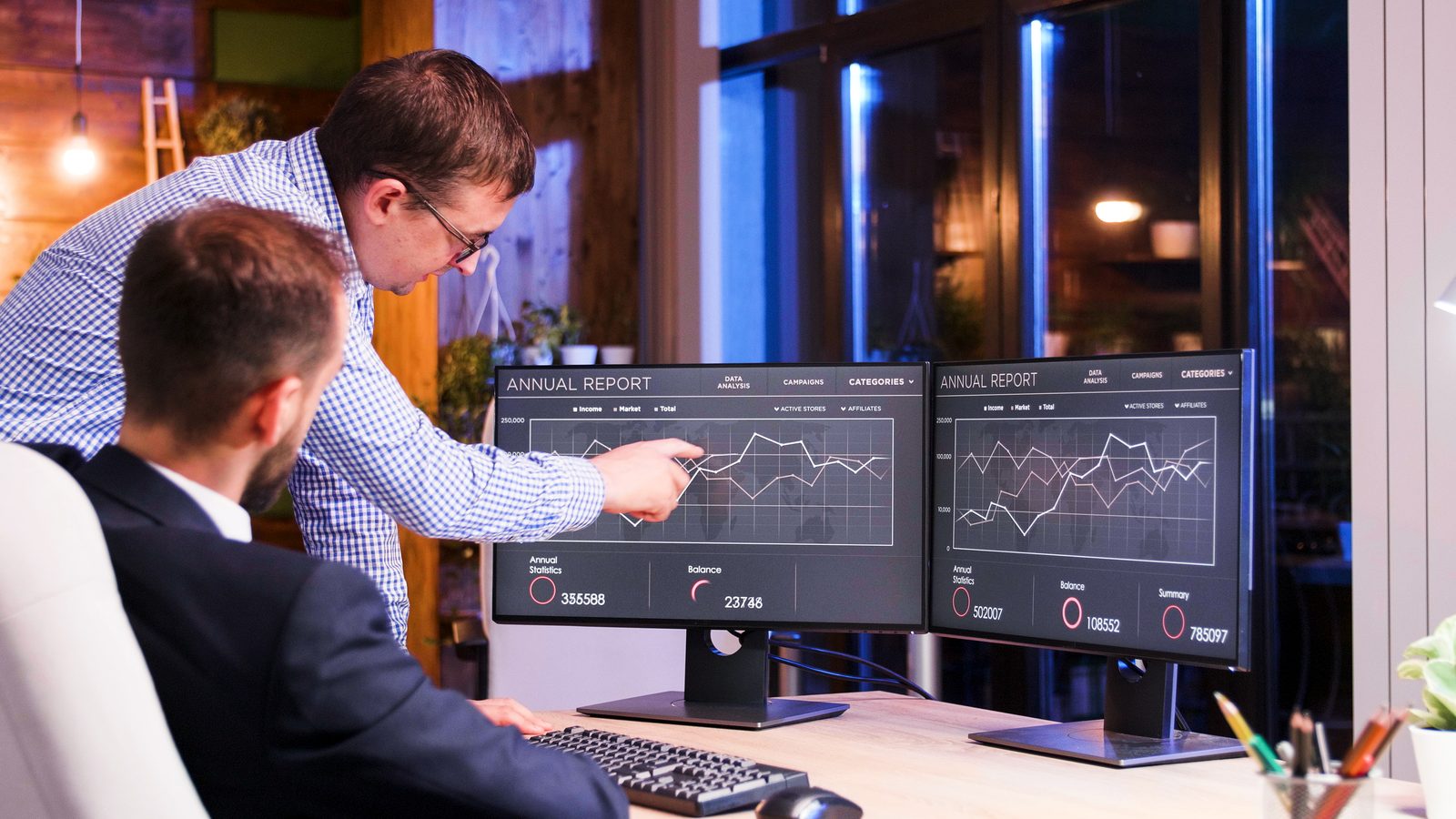

Teams that needed to ship fast, and did. Here's what partnering with Logiciel felt like from the inside.
I would highly recommend them to anyone looking to scale quickly or needing support in engineering, product, or QA.
We don't just call them Logiciel; they're part of the Zeme team. Within the first week they were contributing meaningfully to our codebase.
The Logiciel team worked tirelessly and built everything we needed, with security and best practices across our entire platform. It allowed us to become #1 in our industry, and we couldn't have done it without them.
Engineering-friendly authoring (Git-native, API-first, programmatic), faster deployment (24 hours to auto-discovered catalog vs 12-18 months for Collibra), lower TCO at scale, and a strong active-metadata story. Atlan is the closest competitor in modern positioning; Logiciel differentiates on broader scope (catalog plus quality plus pipeline observability plus cost), engineering ergonomics (Terraform, CI/CD, code-reviewed metadata), and integrated governance enforcement.
Collibra and Alation are mature stewardship platforms - capable but bureaucratic. Most customers replacing those tools consolidate 2-3 EDM line items into Logiciel with 40-60% TCO reduction. We don't compete on enterprise stewardship workflow depth; for the 95% of US enterprise needs, our trade-offs win.
Yes - migration tooling for Atlan, Collibra, Alation, IBM Cloud Pak for Data, Informatica, and other major catalogs. Migration extracts metadata, lineage, glossary, and governance policies from your existing catalog, ingesting into Logiciel while preserving user-facing context.
Migration runs in parallel: Logiciel ingests metadata while continuing to honor existing user workflows. Over 6-12 months, business users transition to Logiciel's UI and the legacy catalog is retired. Migration is fixed-fee scoped to your catalog footprint.
About 60% of customers retire the legacy after 12 months; 40% keep the legacy as a search front-end while Logiciel becomes the metadata of record. Either pattern works.
We parse query logs (Snowflake, Databricks, BigQuery, Redshift query history), dbt manifests, Airflow DAGs, Python instrumentation, and BI tool metadata (Looker LookML, Tableau workbooks, Mode notebooks) to derive column-level lineage automatically. No manual declaration required; lineage updates continuously as new query logs arrive (typically within 5-15 minutes).
For non-SQL transformations (Python, Spark), SDK instrumentation captures lineage at runtime with 1-3 lines of code per script. Accuracy is typically 95%+ for SQL-heavy stacks. Lineage is queryable via API for downstream tools - impact analysis, audit reports, change management, AI agents needing governed access.
Python and Spark instrumentation cover those - typically 1-3 lines of code per script to capture lineage at runtime. The SDK wraps DataFrame and Spark operations to track inputs and outputs at the column level.
For dbt-Python models, lineage is derived automatically from model definitions. For ad-hoc Python scripts (Pandas transforms, ML feature engineering, custom ETL), the SDK provides drop-in instrumentation. Declarative APIs cover edge cases where instrumentation is impractical (closed-source systems, third-party scripts) - you can declare lineage manually with versioned manifests.
We don't require declarative lineage for everything; instrumentation coverage is typically 95%+ for Python-heavy stacks.
Semantic search with recommendations, certified-asset workflows, and a clean UX designed for analysts and stewards rather than engineers. Business users search by business term ('revenue', 'churn rate', 'active customer'), see certified assets ranked first, view lineage as a visual graph, and propose changes through governed workflows.
Glossary curation is structured (definition, owner, classification, examples) without being bureaucratic. For self-service analytics teams, Logiciel typically reduces time-to-find-the-right-table from days to minutes - measurable in stakeholder satisfaction surveys and reduced 'where do I find X' Slack messages. AI-powered search recommendations improve over time as usage patterns establish.
Yes - first 500 assets free, forever. The free tier includes auto-discovery, column-level lineage, basic search, business glossary, and read-only API access on those 500 assets. No credit card, no time limit.
About 30% of free-tier users convert to paid within 6 months when their asset count outgrows 500 or when they want enterprise features (advanced governance, custom workflows, SSO, audit logging). The other 70% stay free, which is the design intent - making catalog accessible to teams that can't budget enterprise tooling but still need their data discoverable.
Free tier is functionally complete for small teams; enterprise tier adds the governance and operations layers.
Connect your warehouse and BI tool - 24 hours later, you have an auto-discovered catalog of your top 500 assets with column-level lineage. The first week is baseline establishment and tuning. Weeks 2-4 are governance configuration (classifications, glossary, ownership) and stakeholder onboarding.
By day 30, most teams have a fully populated catalog covering their most-used 1,000-5,000 assets with active stewardship workflows. ROI in the first quarter is typically expressed as analyst time saved (faster discovery), reduced 'where do I find X' overhead, and improved data trust (certified assets ranked first reduces use of stale data). Most customers consolidate 2-3 ad-hoc tools into Logiciel within 6 months.
Connect your warehouse and BI tool. In 24 hours we deliver an auto-discovered catalog of your top 500 assets - free, no commitment.