
Zeme · Real Estate
Real Estate
Most data fabric tools sell you a vision that requires moving everything you have. Logiciel takes a different approach: virtualization, semantic layer, lineage, and governance across the systems you already run - so you get the value of a data fabric without the migration cost.
without copying data 4 ways. Federated query at scale requires push - down query rewriting and cost-based optimization, not just connectivity - most virtualization tools fail at this.
A semantic layer that defines metrics once and serves them everywhere. Semantic layers without versioned definitions and code review degrade into another set of conflicting definitions, just in a different system.
without making one team the bottleneck for everyone. Cross-domain governance through committee creates the bottleneck mesh was supposed to eliminate; the platform has to enforce policy automatically.
Data fabric without the migration tax.
across Snowflake, Postgres, S3, Salesforce without ETL. Federated query without ETL eliminates a structural class of integration cost while preserving data residency, which most centralization plans break
customer, and ARR; reused by BI, apps, and AI. Semantic layer with one definition of revenue, customer, and ARR eliminates the cross-system reconciliation work that consumes 20-30% of analyst time
that travels with the data. Cross-domain lineage and policy means governance travels with the data, not with the tool - which is why federation works at scale
| Dedicated Pod | Staff Augmentation | Project-Based Delivery |
|---|---|---|
| Embedded data engineering pod aligned to your sprint cadence - typically 3–6 engineers + a US lead. | Senior data engineers, architects, and SMEs slotted into your team to unblock specific work. | Fixed-scope, milestone-driven engagements with clear deliverables and outcomes. |
We map your stack, workloads, team, and constraints in a working session - not an RFP response.
Reference architecture grounded in your reality, with capacity, cost, and migration plans.
Iterative implementation with weekly demos, code reviews, and your team in the loop.
Managed operations or knowledge transfer - your choice. Both with US-aligned coverage.
Continuous tuning of cost, performance, and reliability against measurable SLAs.
Push-down query across cloud and on-prem sources.
Domain-owned metadata, federation-aware search.
Live views across operational and analytical stores.
Centralized metric definitions, decentralized consumption.
Lineage, policy, and quality enforced across systems.
Federated policy with central audit.


Teams that needed to ship fast, and did. Here's what partnering with Logiciel felt like from the inside.
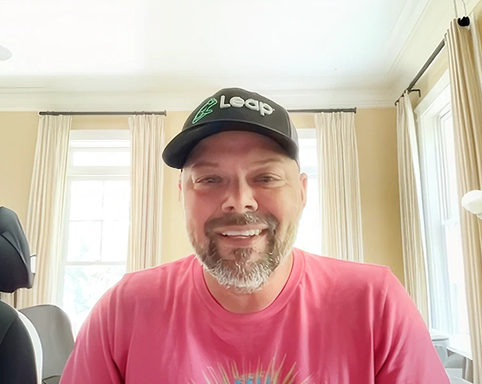
I would highly recommend them to anyone looking to scale quickly or needing support in engineering, product, or QA.
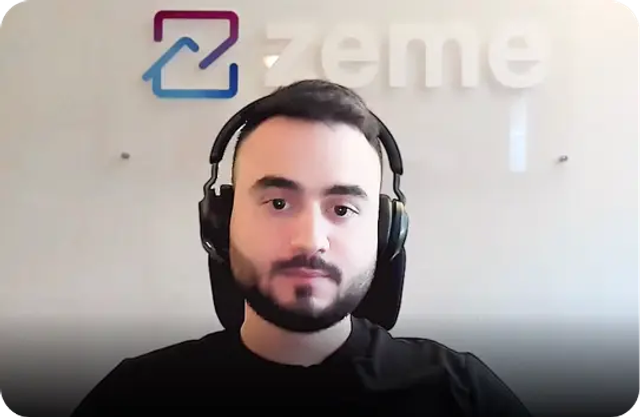
We don't just call them Logiciel; they're part of the Zeme team. Within the first week they were contributing meaningfully to our codebase.
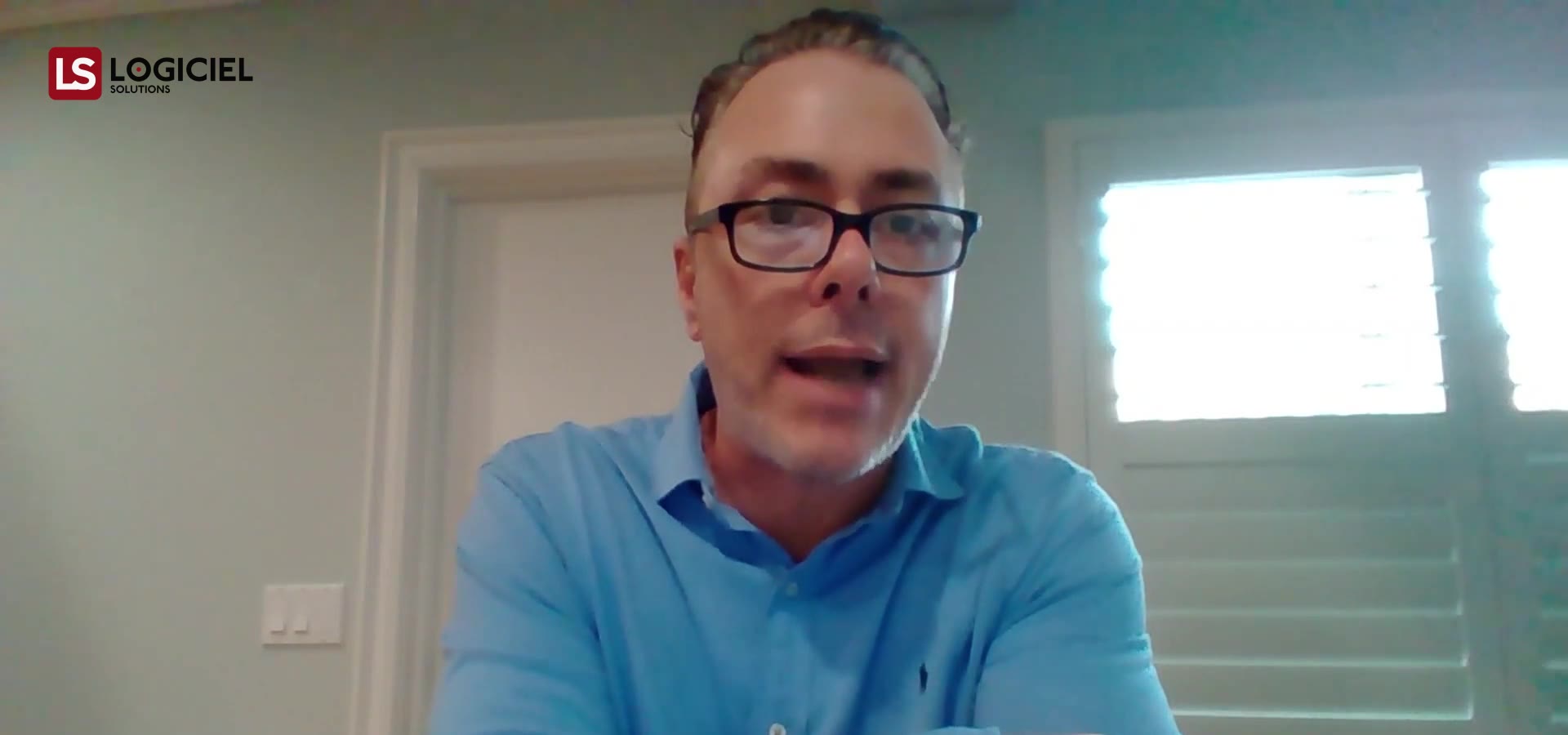
The Logiciel team worked tirelessly and built everything we needed, with security and best practices across our entire platform. It allowed us to become #1 in our industry, and we couldn't have done it without them.

Mesh is an organizational pattern (federated domain ownership of data products). Fabric is a technical architecture (virtualization, semantic layer, distributed catalog, federated query across heterogeneous sources). They're complementary, not competing - most US enterprises end up with elements of each.
Mesh tells you who owns data; fabric tells you how data integrates without being centralized. Logiciel supports both: domain teams can own data products (mesh-style) while consumers query across them via a federated semantic layer (fabric-style) without requiring central ETL.
Most customers don't need to choose; they need a platform flexible enough to support whatever their org structure demands.
No - the entire point of data fabric is to operate where the data lives. Federated query and virtualization let you join across Snowflake, Postgres, S3, Salesforce, and SAP without copying data four ways.
Performance is comparable to ETL'd queries for most analytical workloads; for hot paths, we automatically materialize cached views with TTL-based invalidation. Copies happen only when performance demands it, transparently to the analyst.
This is particularly valuable for multi-region (data stays in-region for residency), post-acquisition (different cloud per acquired entity), and regulated workloads (PII never leaves its protected zone).
Federated architecture is ideal for multi-region -data stays in-region. Queries are routed and partially executed where the data lives, and only result sets cross boundaries (with classification controls preventing PII from being aggregated cross-border).
We have customers running EU/US/APAC fabric configurations with GDPR, US state privacy laws (CCPA, VCDPA, CPA), and APAC regional rules enforced at the platform layer. The semantic layer provides one query surface; the execution layer respects every regional constraint.
For US Federal and FedRAMP customers, fully air-gapped fabric deployments are supported.
Metric and entity definitions are versioned in Git, code-reviewed, and served via a query API. BI tools (Looker, Tableau, Mode), apps, and AI agents consume the same definitions, so 'revenue' or 'customer ARR' means the same thing everywhere - no more three-way KPI mismatches between Sales Ops, Finance, and Product.
The semantic layer is dialect-aware (compiles to Snowflake SQL, BigQuery SQL, Spark SQL, etc.), supports row-level security tied to the consumer's identity, and exposes lineage so analysts can see how a metric is computed end-to-end.
This is increasingly the foundation for AI agents that need governed access to enterprise metrics.
Denodo is a mature data virtualization platform - strong in regulated, on-prem-heavy enterprises but expensive, slow to deploy, and oriented toward older architecture patterns (heavy stewardship, GUI-driven modeling). Logiciel is fabric-focused with modern engineering ergonomics: Git-native, Terraform-friendly, API-first, cloud-first.
For US customers building on Snowflake/Databricks/BigQuery with dbt-style transformation patterns, Logiciel typically delivers fabric capability at 40-60% lower TCO and 3-5x faster time to first federated query. Denodo customers migrating to Logiciel report similar capability with better engineering velocity.
We don't recommend Logiciel for customers committed to fully on-prem, mainframe-heavy stacks - Denodo wins there.
Yes - sub-second federated queries support apps and reverse-ETL flows, not just analytics. Common operational patterns: customer service apps querying live customer data across CRM, billing, support, and product analytics in one view.
Pricing engines pulling SKU, inventory, and competitive data live. Fraud workflows joining transaction streams with profile and behavior data. The platform caches hot query patterns and pre-computes materialized views automatically, so consumer SLAs (typically 100-500ms p99) are met without analysts manually tuning.
For sub-100ms hard real-time, we recommend specialized in-memory stores; for everything else, fabric works.
A single domain - usually the most painful one - to prove the architecture before federating. Common starting points: customer 360 (integrates 4-6 systems naturally), financial reporting (high pain, well-bounded scope), or post-acquisition data integration (urgent, executive-sponsored).
The 90-day pilot establishes the semantic layer for one domain, federates 3-5 source systems, and serves 2-3 high-value consumer workloads (a BI dashboard, an operational app, an AI agent). After pilot, customers typically expand to 2-3 additional domains per quarter, completing fabric rollout in 12-18 months for mid-size enterprises and 18-30 months for Fortune 500 footprints.
Book a 30-minute fabric design session with a Logiciel architect. Bring your messiest cross-system question. We'll show you the federated query that answers it without moving any data.