
Zeme · Real Estate
Real Estate
Move beyond experiments to scalable enterprise AI applications
Generative AI has quickly become one of the most transformative technologies in modern software systems. Enterprises are exploring its potential across customer support, internal productivity tools, content generation, product features, and data analysis.
However, deploying generative AI in enterprise environments is significantly more complex than using consumer AI tools. Production systems must handle data governance, model reliability, infrastructure scalability, and integration with existing business systems.
Generative AI services help organizations design architectures, implement models, and deploy reliable AI capabilities across their product and operational ecosystems.
Generative AI systems can automate support responses, summarize customer interactions, and assist human agents with contextual insights.
AI systems can analyze internal documentation, knowledge bases, and databases to deliver conversational information retrieval.
Marketing teams, legal teams, and operations teams use generative AI to create structured documents, reports, and communications.
Software products increasingly integrate generative AI to power search, recommendations, automated workflows, and conversational interfaces.
Generative AI can assist engineering teams with documentation, code suggestions, and debugging support.
Generative AI prototypes are developed and evaluated using internal data sources and targeted use cases.
AI systems are integrated into applications with monitoring, safety controls, and performance validation.
As usage grows, infrastructure and model pipelines are optimized to maintain reliability and cost efficiency.
Organizations deploying generative AI often implement additional capabilities such as:
These capabilities ensure AI systems operate reliably in production environments.


Teams that needed to ship fast, and did. Here's what partnering with Logiciel felt like from the inside.

I would highly recommend them to anyone looking to scale quickly or needing support in engineering, product, or QA.
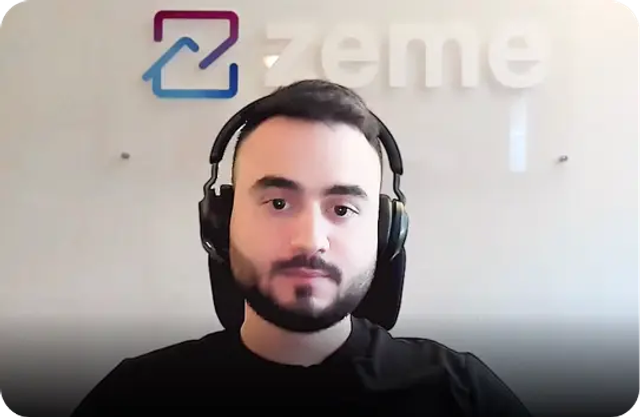
We don't just call them Logiciel; they're part of the Zeme team. Within the first week they were contributing meaningfully to our codebase.

The Logiciel team worked tirelessly and built everything we needed, with security and best practices across our entire platform. It allowed us to become #1 in our industry, and we couldn't have done it without them.

They include designing, building, and deploying AI systems that generate text, images, or other outputs.
RAG combines language models with external knowledge sources to improve response accuracy.
Yes, through secure data pipelines and vector database architectures.
Costs depend on model size, inference volume, and infrastructure optimization.
Prototype deployments may take weeks, while full production systems require several months.
Through monitoring, evaluation frameworks, and structured prompt engineering.
If you want to explore enterprise generative AI use cases and deployment strategies, let’s talk.