
Zeme · Real Estate
Real Estate
Most metadata management tools are 'great if someone is paid to keep them updated.' That person doesn't exist on your team. Logiciel auto-discovers, auto-lineages, and auto-updates metadata across your stack - so stewards govern decisions, not data entry.
Maintained until the original sponsor moved teams. Manual catalog maintenance has the same fate every time: enthusiasm-driven launch, sponsor turnover, terminal decay.
Engineers don't trust them. They Slack the steward instead. Stale catalog entries train engineers to bypass the catalog entirely, defeating the investment.
Lineage in 8 places, all wrong, is a structural failure of the manual approach; no amount of stewardship process fixes it.
| Dedicated Pod | Staff Augmentation | Project-Based Delivery |
|---|---|---|
| Embedded data engineering pod aligned to your sprint cadence - typically 3–6 engineers + a US lead. | Senior data engineers, architects, and SMEs slotted into your team to unblock specific work. | Fixed-scope, milestone-driven engagements with clear deliverables and outcomes. |
We map your stack, workloads, team, and constraints in a working session - not an RFP response.
Reference architecture grounded in your reality, with capacity, cost, and migration plans.
Iterative implementation with weekly demos, code reviews, and your team in the loop.
Managed operations or knowledge transfer - your choice. Both with US-aligned coverage.
Continuous tuning of cost, performance, and reliability against measurable SLAs.
Connects, discovers, classifies - no manual entry.
Map business terms to physical data; versioned.
Programmatic access for quality, access, observability tools.
Cross-system, cross-language lineage including dbt and Python.
PII, classification, retention - applied via metadata, enforced by policy.
Approval, ownership, and curation flows for high-value assets.
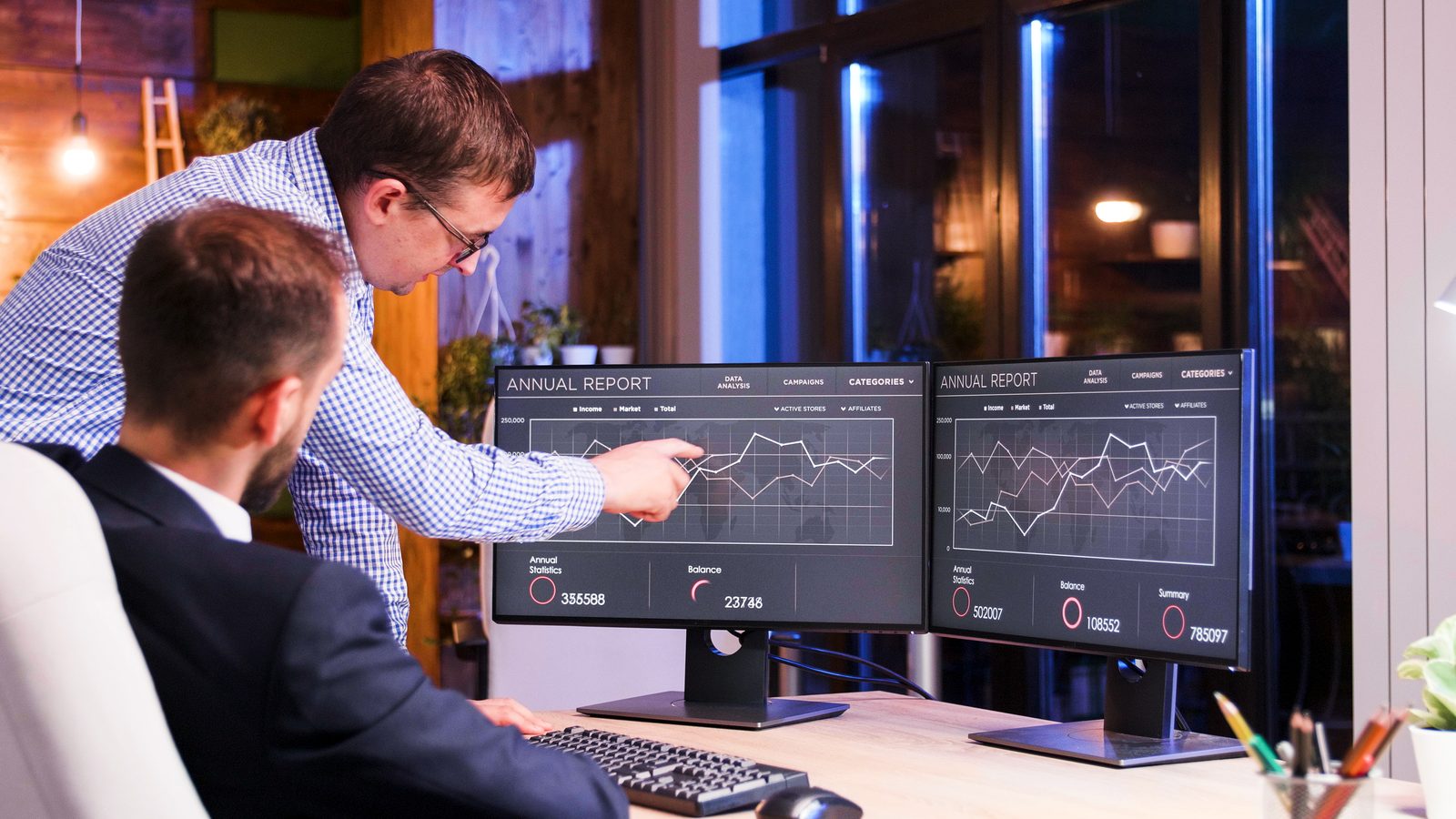
Teams that needed to ship fast, and did. Here's what partnering with Logiciel felt like from the inside.
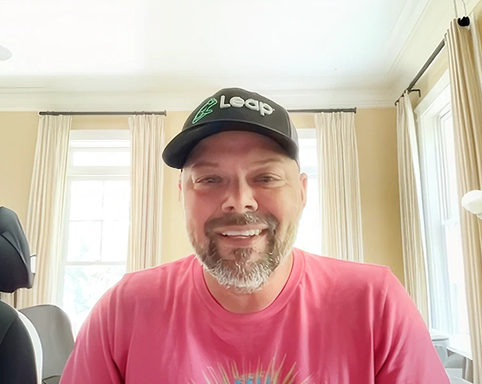
I would highly recommend them to anyone looking to scale quickly or needing support in engineering, product, or QA.
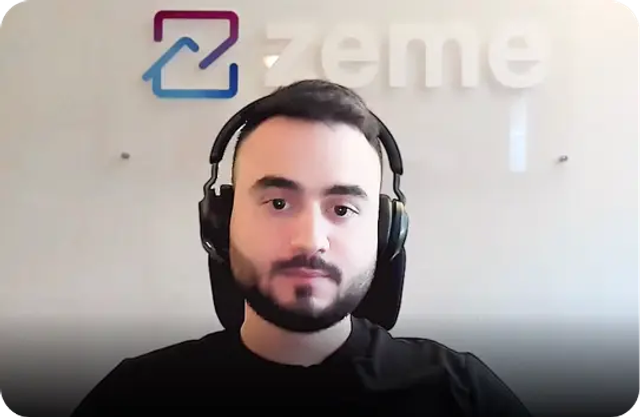
We don't just call them Logiciel; they're part of the Zeme team. Within the first week they were contributing meaningfully to our codebase.
The Logiciel team worked tirelessly and built everything we needed, with security and best practices across our entire platform. It allowed us to become #1 in our industry, and we couldn't have done it without them.
Engineering-friendly authoring (Git-native, API-first, programmatic), faster deployment (90 days to first value vs 12-18 months for Collibra), lower TCO at scale, and a strong active-metadata story. Atlan is the closest competitor in modern positioning; Logiciel differentiates on broader scope (catalog plus quality plus pipeline observability plus cost), engineering ergonomics (Terraform, CI/CD, code-reviewed metadata), and integrated governance enforcement.
Collibra and Alation are mature stewardship platforms - capable but bureaucratic and resented by engineering. Most customers replacing those tools consolidate 2-3 EDM line items into Logiciel with 40-60% TCO reduction. We don't compete on enterprise stewardship workflow depth; for the 95% of US enterprise needs, our trade-offs win.
We parse query logs (Snowflake, Databricks, BigQuery, Redshift query history), dbt manifests, Airflow DAGs, Python instrumentation, and BI tool metadata (Looker LookML, Tableau workbooks, Mode notebooks) to derive column-level lineage automatically. No manual declaration required; lineage is updated continuously as new query logs arrive (typically within 5-15 minutes).
For non-SQL transformations (Python, Spark), we provide SDK instrumentation that captures lineage at runtime with minimal code changes. Lineage is queryable via API for downstream tools: impact analysis, audit reports, change management, and AI agents that need governed access.
Accuracy is typically 95%+ for SQL-heavy stacks, lower for Python-heavy without instrumentation.
Python and Spark transformations are supported via SDK instrumentation - typically 1-3 lines of code per script to capture lineage at runtime. For dbt-Python models, lineage is derived automatically from the model definitions.
For ad-hoc Python scripts (Pandas transforms, ML feature engineering, custom ETL), the SDK wraps DataFrame and Spark operations to track inputs and outputs at the column level. We don't require declarative lineage manifests (which engineers never maintain), and we don't break when code changes (which manual lineage diagrams always do).
For Python-heavy customers (typically AI/ML-adjacent), instrumentation coverage is the difference between accurate lineage and theater.
Yes - we provide migration tooling that extracts metadata, lineage, glossary, and governance policies from Collibra, Alation, Atlan, IBM Cloud Pak for Data, Informatica, and other major catalogs. Migration runs in parallel: Logiciel ingests metadata from your existing catalog while continuing to honor existing user workflows.
Over 6-12 months, business users transition to Logiciel's UI and the legacy catalog is retired. Migration is fixed-fee scoped to your catalog footprint. About 60% of customers retire the legacy catalog after 12 months; 40% keep it as a search front-end while Logiciel becomes the metadata of record. Either pattern works; we don't force a hard cutover.
Yes - semantic search, recommendation, certified-asset workflows, and a clean UX designed for analysts and stewards rather than engineers. Business users search by business term ('revenue', 'churn rate', 'active customer'), see certified assets ranked first, view lineage as a visual graph, and propose changes through governed workflows.
Glossary curation is structured (definition, owner, classification, examples) without being bureaucratic. For self-service analytics teams, Logiciel typically reduces time-to-find-the-right-table from days to minutes - measurable in stakeholder satisfaction surveys and in the number of 'where do I find X' Slack messages.
Tightly - tags and classifications drive quality rules and access policies, with active metadata flowing both directions. A column tagged 'PII' automatically gets masking policies enforced and PII-aware quality rules applied. A dataset certified as 'Trusted' carries quality SLAs that route alerts when violated.
A business glossary term 'Revenue' has quality rules attached that ensure it's reconciled across financial reporting. Active metadata is the difference between a catalog as a wiki (passive, decay-prone) and a catalog as a control plane (used by quality, access, and observability tools).
This is increasingly the foundation for AI agents that need governed access to enterprise metadata.
Per-asset tier - predictable at scale, with unlimited users and no per-seat penalties. An 'asset' is a managed table, a model, a feature, a dashboard, or a dataset that Logiciel catalogs and lineages.
Mid-market customers (5,000-20,000 assets) typically pay $40-90K ARR. Enterprise tiers (100,000+ assets, advanced governance, dedicated TAM) start at $200K ARR. Pricing is transparent and benchmarked against Atlan, Collibra, and Alation at evaluation - Logiciel typically saves 30-50% at equivalent capability.
We don't charge separately for lineage, search, or API access - those are core, not premium. Free tier covers first 500 assets indefinitely.
Connect your warehouse and BI tool. In 24 hours we'll have an auto-discovered, auto-lineaged catalog of your top 500 assets - for you to compare against your current state.