
The difference in data health care Systems is:
Not just the size of the data, Not just the Volume of data, It’s a critical part of life for many people.
For instance, if your Data Pipeline experiences delays it could affect the way patients receive care. If there is a data inconsistency within the system there will be incorrect decisions made. Finally, any lapse in security will lead to penalties for not following through with compliance, and it will cost you your company’s reputation and trusts.
Thus, the requirements of how to build a Health care Data Infrastructure are some of the toughest engineering problems being faced in today’s world.
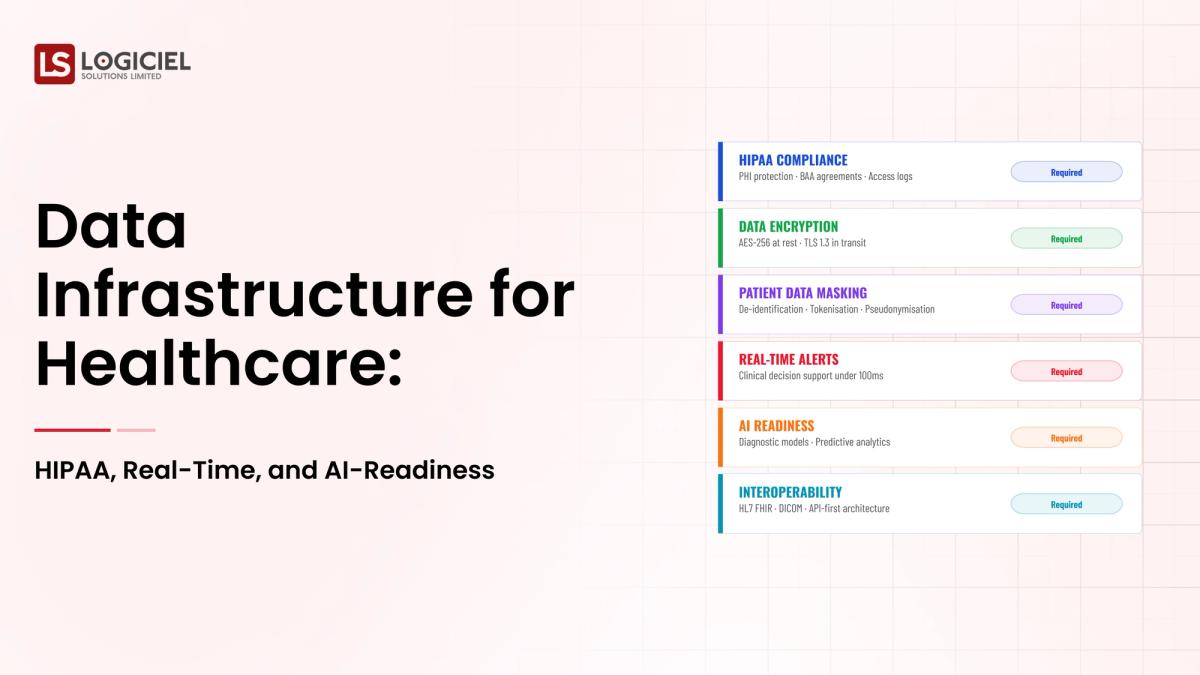
As a CTO or VP of Engineering responsible for the building and scaling to meet Health Care Data Infrastructure requirements, your system has three simultaneous requirements; Compliance with the Law (HIPAA, and where applicable GDPR), Provide the ability for realtime or near realtime use cases and Provide the ability to allow for AI driven Insights and decision making.
Most of the health care systems have difficulty accomplishing just two of these three requirements.
RAG & Vector Database Guide
Build the quiet infrastructure behind smarter, self-learning systems. A CTO’s guide to modern data engineering.
This guide will discuss:
What makes Data Infrastructure within the health care system fundamentally different from all other infrastructures. How the Health Care System can design a System that meets all three of the Major Requirements: Compliance, Speed, and Scalability. The types of Architecture Patterns in Use by themost successful health care teams.
Let’s begin by understanding the basic principles of how to create an Infrastructure for the Health Care System.
1) The Differences Between Health Care Data Infrastructures from all others
Heath Care Data Infrastructures operate under constraints that most of the other industries do not have to deal with.
a) The sensitivity of Health Care Data
Examples: Health Care Records (HRC) are likely never going to be Publicly Accessed; They include Correcting Medical Records, EHR systems that willHealthcare Systems
Healthcare systems are subject to regulatory requirements such as:
HIPAA (U.S.) GDPR (Europe) Local laws.
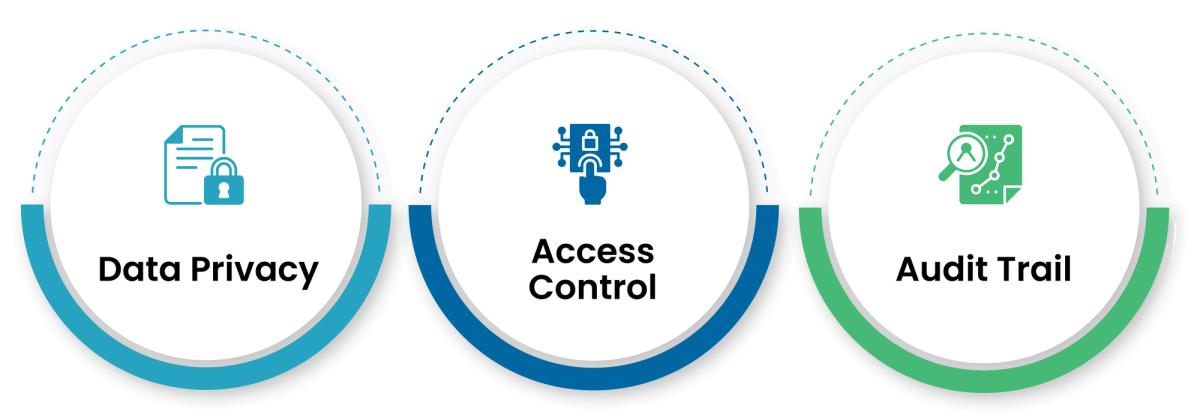
Regulations that impact healthcare systems are:
- Data Privacy
- Access Control
- Audit Trail.
Real-time requirements
Real-time requirements can be found in many healthcare use cases.
Examples of real-time requirements:
ICU monitoring systems Remote patient monitoring Emergency response systems.
Fragmented Data
Healthcare data is often:
- Discussed across multiple
- systems Stored in multiple formats
- Generated from many sources.
This creates challenges when trying to integrate the data.
Accuracy and Reliability Requirements
Errors made by healthcare professionals can result in serious medical errors.
As a result, there are:
- Data Quality
- System Reliability.
Definition of Key Insight
Healthcare infrastructure is more than just performance. It must also be trustworthy, compliant, and accurate.
Section 2: Why Healthcare Systems Need New Infrastructure Approaches
Traditional data systems are inadequate to serve the needs of today's healthcare systems.
Traditional Data Storage Limitations
Many healthcare systems are dependent on:
- Batch processing
- Silos
- Manual integrations.
These create issues including:
Time Delays in Getting Information Inconsistency in Data Limited Scalability.
Changes in Healthcare
Modern healthcare systems require on-demand data access through an integrated approach and AI-based solutions.
AI is being used in healthcare for:
- Assistance in Diagnosis
- Predictive Analytics
- Personalized Patient Care.
AI in Healthcare
AI is being used in:
- Supporting Diagnosis
- Predicting Future Needs
- Personalizing Care.
Real-time requirements need:
High-Quality Data Continuous Pipelines Reliable Infrastructure.
Cost of Not Adapting
Organizations that do not invest in modern infrastructure will not see AI initiatives become successful, experience more inconsistency in their data, and will continue to experience operational inefficiencies.
Comparing Legacy and Modern Healthcare Systems
The Legacy System Model:
- Batch processing
- Separate silos of data
- Reactive decision making.
The Modern System:
Real-time access to data
Integrated platforms for sharing and exchanging data Proactive decision making.
Key Insight
Healthcare systems must move from’s take a look at what will be required to construct a healthcare information infrastructure.
1. Incoming Data
Sources of incoming data include:
Electronic Health Records (EHRs) Medical devices APIs and integrations
Essential attributes include:
Real-time ingestion Data validation Secure data transfer
2. Data Storage
Supporting both:
- Structured Unstructured data
- Data should be stored securely
- Data storage must have scalability.
Types of data warehouses include:
Data warehouse Data lake / lake house
3. Data Transformation
Oftentimes, this means that data must be processed (i.e., cleaned, aggregated, and engineered) into usable formats based upon specific business purposes.
4. Orchestration
Pipeline scheduling Dependencies management Failure management
Necessary to provide reliability.
5. Security and Compliance
Ensured through:
Encrypted data Controlled access Audit logs
This layer is non-negotiable.
6. Data Delivery
Requires data to be made available to/from:
Applications Dashboards APIs
Requirements must include:
Low-latency Reliability
How the interdependent layers of an effective Health Data Infrastructure work together
Incoming data is securely ingested into the Health Data Warehouse or Health Data Lake in accordance with HIPAA patient confidentiality rules Data is stored in a compliant manner to protect HIPAA patient confidentiality Data is transformed into usable formats for Hospital operations Data can be orchestrated in a Director-approved manner Data can be delivered to all applications that utilize incoming/outgoing patient data
HIPAA requires that security and compliance be incorporated into all components of a Health Data Infrastructure.
Section 4: Value of Real-Time Healthcare Data
Utilization of real-time data would yield tremendous value in certain healthcare situations.
Examples of high-value real-time healthcare use cases include:
Patient monitoring systems Emergent response systems Telemedicine systems
Sample use of real-time data in patient monitoring systems including an Intensive Care Unit (ICU) patient monitoring system
Continuous data (from sensors) is created and transmitted to the EHR in real-time The EHR then processes the continuous data (from sensors) into EHR databases in real-time The EHR generates alerts in real-time
Challenges of Real-Time Healthcare Data Systems
Volume of data (i.e., multi-channel sensor data) Zero margin for error Strict requirements regarding acceptable latency
Achieving a balance between real-time data and batch processed data. Not all healthcare data has a requirement for real-time processing.Batch is still relevant for:
- Reporting
- Historical analysis
- Research
- Hybrid architecture
Real-time is used by leading systems for critical use cases and batch is used for analysis and reporting.
Key Insight
Real-time applications within healthcare cannot be considered as options for critical systems, but rather as necessities.
Section 5 - Compliance and Security: Building for HIPAA and Beyond
Compliance is a central component of healthcare infrastructure.
Key Requirements
To be compliant, healthcare systems must utilize the following:
- Data must be encrypted
- Access control must be implemented
- Audit logging must be in place
Access Control
Define:
- Who has access to data
- What they can do with it
Encryption
Protect data:
- While at rest
- While in transit
Audit Logging
Track:
- Access to data
- Changes made
- Activity within the system
Data Governance
Define:
- Policies
- Classify types of data
- Retention rules
Common Mistakes
- Thinking of compliance as an afterthought
- Not logging all events using comprehensive audit logging
- Implementing inadequate access controls
What High Performance Teams Do
- Build compliance into architecture
- Use automation to monitor and enforce compliance
- Perform regular audits of systems
Key Insight
Compliance is not simply a constraint; it is also part of the architectural design.
Section 6 - AI Ready Healthcare Infrastructure: What Leaders Should Build
AI has become the foundation for all healthcare innovations.
AI Requires
- Clean and consistent data
- Reliable data pipelines
- Data lineage
Challenges
- Data fragmentation
- Inconsistent schema
- Regulatory constraints
What AI Ready Systems Have
- Standardized data models
- Feature pipelines
- Integration of real-time and batch
Example
A predictive model for patient risk will:
- Use historical data
- Be updated in real-time
- Have consistent features
What Leaders Should Do
- Align data pipelines to support machine learning workflows
- Create a standard feature engineering process
- Healthcare organizations must work to improve data quality
Key Insight
AI success in the healthcare sector will depend more on the readiness of the infrastructure than on the sophistication of the model.
Healthcare data infrastructure presents one of the greatest engineering challenges from both a compliance and performance perspective.
Successful teams will begin to consider compliance, reliability, real-time response, and readiness of artificial intelligence at the same time while designing systems.
At Logiciel, we assist our customers with creating data infrastructures to support secure, scalable, and AI-ready innovations in the healthcare sector.
If the current system you are using is struggling to balance compliance versus providing reliable information in real time, now is the time for you to rethink your architecture configuration(s).
Contact Logiciel to learn how our AI-focused engineering teams can design a reliable, compliant, and impactful healthcare data infrastructure for you!
Agent-to-Agent Future Report
Understand how autonomous AI agents are reshaping engineering and DevOps workflows.
Frequently Asked Questions
What is healthcare data infrastructure?
The healthcare data infrastructure is a system that manages, processes, and delivers healthcare data in an effective way to comply with regulations while providing reliable service.
Why is real-time data important in healthcare?
Real-time data facilitates immediate decision making; this is critical in situations such as monitoring patients or responding to emergency situations.
What are the key requirements for compliance?
The main requirements for compliance include:
- Data encryption
- Access control
- Audit logging
- Data governance.
How does AI affect healthcare infrastructure?
AI is increasing the need for more advanced infrastructure types in order for those systems to provide high-quality, consistent, and real-time data.