
Zeme · Real Estate
Real Estate
Your dbt tests cover what you wrote. The issues that hurt you are the ones nobody anticipated. Logiciel's data quality tools combine your existing tests with anomaly detection and lineage-aware routing - so issues get caught and routed to the right team without 2,000 more tests.
Last incident still surprised you. Rising test coverage without rising stakeholder trust is a structural signal that rule-based quality has hit its ceiling.
Steward firefighting indicates the platform investment hasn't kept pace with quality expectations; the fix is structural.
for the issues you can't anticipate. Anomaly detection alongside rules catches the unanticipated issues that pure rule-based systems miss.
alerts to the right team, not the whole channel. Lineage-aware routing means alerts go to the right team without manual triage; the cumulative time savings are substantial.
quality visible to business owners. Stakeholder-readable SLAs turn quality from an engineering preoccupation into a measurable discipline business owners can govern.
Embedded data engineering pod aligned to your sprint cadence - typically 3–6 engineers + a US lead.
Senior data engineers, architects, and SMEs slotted into your team to unblock specific work.
Fixed-scope, milestone-driven engagements with clear deliverables and outcomes.
We map your stack, workloads, team, and constraints in a working session - not an RFP response.
Reference architecture grounded in your reality, with capacity, cost, and migration plans.
Iterative implementation with weekly demos, code reviews, and your team in the loop.
Managed operations or knowledge transfer - your choice. Both with US-aligned coverage.
Continuous tuning of cost, performance, and reliability against measurable SLAs.
Schema, freshness, custom SQL - all versioned.
Volume, distribution, freshness anomaly detection per dataset.
Source-to-warehouse reconciliation for revenue, inventory, customer counts.
Co-owned rules, signoff, escalation.
Alerts to upstream owners + downstream consumers.
Per-domain quality dashboards for business owners.


Teams that needed to ship fast, and did. Here's what partnering with Logiciel felt like from the inside.
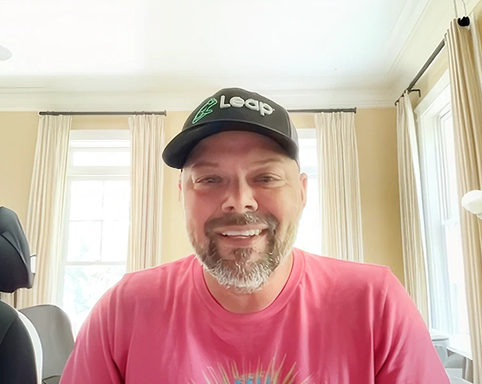
I would highly recommend them to anyone looking to scale quickly or needing support in engineering, product, or QA.
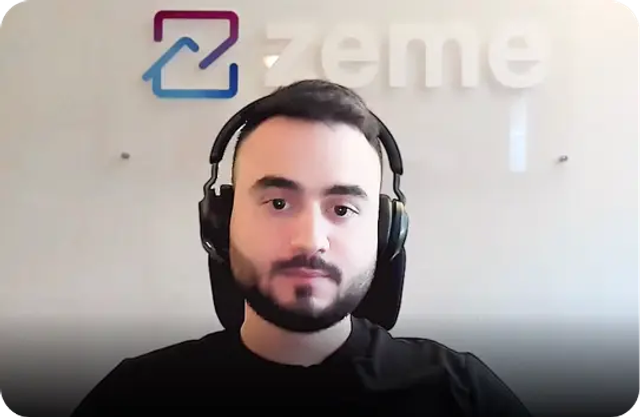
We don't just call them Logiciel; they're part of the Zeme team. Within the first week they were contributing meaningfully to our codebase.

The Logiciel team worked tirelessly and built everything we needed, with security and best practices across our entire platform. It allowed us to become #1 in our industry, and we couldn't have done it without them.

Includes their rule primitives plus ML-based anomaly detection, lineage-aware routing, stakeholder dashboards, and steward workflows — all managed, not self-hosted. Great Expectations is open-source and capable but operationally heavy; you run the runtime, the metadata store, and the alerting yourself.
Soda is managed but rule-only; the issues that hurt are rarely the ones you wrote rules for. Logiciel layers anomaly detection on top of rules, catching the 'this number changed 30% and nobody knows why' patterns that pure rule-based systems miss entirely.
For US mid-market and enterprise customers, Logiciel typically replaces Great Expectations + a separate alerting layer + a separate stakeholder dashboard with a single platform.
Yes — Logiciel runs your existing dbt tests as part of unified pipeline monitoring and adds anomaly detection on top. Drop your dbt project (manifest, tests, profiles) into Logiciel and the platform orchestrates dbt runs, surfaces test results in unified observability, and routes failures through lineage-aware alerting. dbt's `not_null`, `unique`, `accepted_values`, and custom tests all flow through naturally.
Logiciel adds the layer dbt tests can't reach: anomaly detection on volumes and distributions, schema drift detection, freshness lag monitoring, and stakeholder SLA dashboards. About 80% of our customers run dbt; we make dbt's quality story complete rather than competing with it.
Anomaly detection is per-dataset trained on 30-60 days of historical patterns to minimize false positives. Most teams report fewer than 2 false positives per week per 1,000 monitored datasets after the first week of stabilization.
The first 7 days produce more alerts as baselines establish. We provide a tuning period with an implementation engineer to suppress known-noisy patterns and adjust sensitivity per dataset. After tuning, signal-to-noise is typically 5-10x better than rule-only systems.
For datasets with legitimate volatility (marketing campaigns, seasonal patterns, fiscal close periods), context-aware baselines respect known cycles. Tuning is ongoing but lightweight after initial onboarding.
Per-domain dashboards and signoff workflows let stewards co-own quality without writing SQL. Stewards see their domain's quality SLAs (freshness, accuracy, completeness, timeliness), can author business-rule quality checks via templates (no SQL required for common patterns), approve anomaly investigations, and sign off on schema changes.
Engineering writes the technical primitives; stewards govern the meaning. This split makes data quality programs sustainable — instead of forcing stewards to learn SQL or forcing engineers to manage business rules. For regulated customers, steward signoff is auditable evidence of data governance, supporting SOX, HIPAA, GDPR, and BCBS 239 compliance frameworks.
Quality monitoring runs on metadata (schema, row counts, distributions over hashed values) and sampled non-PII data; PII stays masked or in-place. For deeper analysis on PII-containing fields, we support customer-managed encryption keys and tokenization patterns where the platform sees only obfuscated values.
Auto-classification identifies PII columns (name, email, SSN, payment data) and applies appropriate masking automatically. For HIPAA, GDPR, CCPA, and other regimes, we configure region-specific PII rules by default and provide auditable evidence of masking enforcement.
PII handling is a frequent regulated-customer concern; we have specific reference architectures for healthcare, financial services, and PropTech.
Yes — up to 25 datasets monitored free, forever, with no credit card and no time limit. The free tier includes anomaly detection, freshness monitoring, schema drift, lineage-aware routing, and Slack alerting on those 25 datasets — full capability, just bounded scope.
About 30% of free-tier users convert to paid within 6 months when their dataset footprint outgrows 25 or when they want enterprise governance and SSO. The other 70% stay free, which is the design intent — making data quality accessible to teams that can't budget enterprise tooling but still need their pipelines to be trustworthy.
Free tier is functionally complete for small teams, not a marketing trial.
24 hours to first anomaly detected on your top datasets. Connect your warehouse and we auto-profile the top 100 datasets, establishing 30-60 day baselines from query history without a waiting period. Anomaly detection starts immediately.
The first surfaced issue typically arrives within 48-72 hours and often catches a real problem the team hadn't noticed. Week 1 is baseline stabilization; weeks 2-4 are routing and stakeholder dashboard configuration.
By day 30, most teams have eliminated 60-80% of 'is the data right?' Slack threads and have measurable improvement in stakeholder trust. ROI in the first quarter is typically expressed as engineer hours regained plus financial close cycle time reduction.
No credit card. Connect your warehouse, see anomalies on your top datasets, decide whether to expand.