
Zeme · Real Estate
Real Estate
Streaming used to require a dedicated Kafka SRE team. Not anymore. Logiciel's data streaming platform gives you exactly-once semantics, sub-second latency, and a managed control plane - without making streaming a separate engineering org.
Most US teams 'doing streaming' are quietly admitting:
Cron-driven 'real-time' is a confession that the streaming infrastructure isn't trusted enough to flip on; the cost of that distrust compounds quietly.
Departed-engineer-built Kafka clusters are a key-person risk that becomes a P1 the moment the engineer leaves.
Re-implemented offset management, dedup, and replay logic per use case is engineering tax that the platform should absorb.
| Dedicated Pod | Staff Augmentation | Project-Based Delivery |
|---|---|---|
| Embedded data engineering pod aligned to your sprint cadence - typically 3–6 engineers + a US lead. | Senior data engineers, architects, and SMEs slotted into your team to unblock specific work. | Fixed-scope, milestone-driven engagements with clear deliverables and outcomes. |
We map your stack, workloads, team, and constraints in a working session - not an RFP response.
Reference architecture grounded in your reality, with capacity, cost, and migration plans.
Iterative implementation with weekly demos, code reviews, and your team in the loop.
Managed operations or knowledge transfer - your choice. Both with US-aligned coverage.
Continuous tuning of cost, performance, and reliability against measurable SLAs.
Kafka, Kinesis, Pub/Sub, Pulsar - native sources.
Sub-minute freshness in Snowflake, Databricks, BigQuery.
Reprocess streams idempotently without disrupting live consumers.
Joins, aggregations, windowing - exactly-once.
Re-emit transformed streams to downstream consumers.
Tooling and playbooks to migrate from Airflow to Logiciel in weeks.


Teams that needed to ship fast, and did. Here's what partnering with Logiciel felt like from the inside.
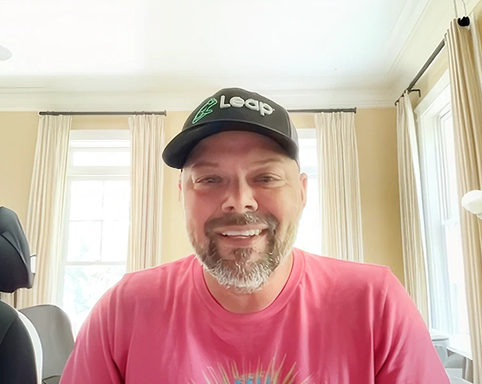
I would highly recommend them to anyone looking to scale quickly or needing support in engineering, product, or QA.
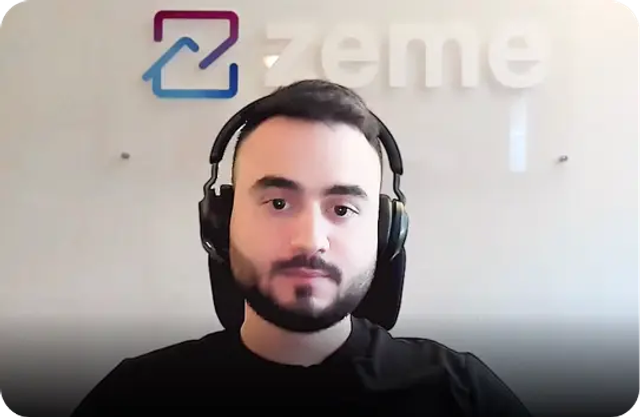
We don't just call them Logiciel; they're part of the Zeme team. Within the first week they were contributing meaningfully to our codebase.

The Logiciel team worked tirelessly and built everything we needed, with security and best practices across our entire platform. It allowed us to become #1 in our industry, and we couldn't have done it without them.

We can replace self-managed Kafka or sit alongside Confluent Cloud, depending on your migration appetite. For US teams without a dedicated platform team running Kafka, replacement is usually the right call - operational savings (no cluster ops, no version upgrades, no zookeeper-to-KRaft migrations) typically outweigh per-message pricing.
For teams already heavily invested in Confluent Cloud with KSQL, Schema Registry, and Connect, sitting alongside (using Logiciel for new use cases while keeping Confluent for existing) is often more pragmatic. We don't force migration; we provide migration tooling when you choose.
Most US customers consolidate over 12-18 months as Confluent contracts come up for renewal.
Flink is an excellent stream processing engine - capable of stateful, exactly-once, sub-second processing at scale. Running Flink well, however, is operationally hard: cluster management, state backend tuning, savepoint management, version upgrades, and SRE expertise that most US data teams don't have on staff.
Logiciel gives you Flink-class capability with managed operations - same exactly-once semantics, same stateful processing, same windowing primitives, but no Flink cluster to babysit. For teams running Flink today, we can provide a TCO comparison.
For teams considering Flink, we typically save 40-60% in total cost when operational overhead is included.
Built in - natively for both stateless and stateful operations (joins, aggregations, windowed computations). No manual idempotency keys, no dedup tables, no 'eventually consistent if you squint.' Concretely: streaming sinks (warehouse writes, downstream Kafka topics, API endpoints) are idempotent by default.
Stateful computations checkpoint with transactional commit semantics. Replays of historical windows don't produce duplicates downstream. For US FinTech, billing-critical, and inventory-critical customers where exactly-once is a hard requirement, we've passed independent third-party audits on the guarantee.
The exactly-once contract is part of the platform SLA, not aspirational marketing copy.
Yes - same orchestration primitives, same pipeline definitions, same observability model. Change the input source (a Kafka topic instead of a Snowflake table) and the same transformation logic runs in streaming mode with windowing and exactly-once semantics.
This eliminates the typical 'two architectures' problem where batch and streaming have different code, different lineage, different testing, and different oncall. For most US data teams, the streaming-batch unification is one of the highest-leverage Logiciel benefits - the operational and code maintenance savings compound over time.
About 60% of our customers run unified streaming-and-batch pipelines after 12 months.
Stream-to-API endpoints with sub-second freshness, exactly-once delivery, and configurable SLA tracking. Common patterns: real-time personalization (user activity → feature update → next page render), fraud detection (transaction → risk score → approve/decline), inventory and pricing (stock change → API → app), and live dashboards (event stream → aggregation → embedded chart).
Latency budgets are typically 100-500ms p99 for these use cases; for hard sub-100ms, we recommend specialized in-memory stores. The serving layer integrates with feature stores so the same feature definitions drive ML inference and operational decisions, eliminating training-serving skew.
Native - replay any time window without affecting current consumers, with bounded resource consumption to prevent replay-induced production incidents. Backpressure is handled automatically through configurable consumer-side flow control; sources slow down when sinks can't keep up rather than overwhelming downstream.
For replay scenarios (debugging, schema change retroactive, model retraining on historical data), we provide point-in-time replay with idempotent destinations so the same input produces the same output, every time. Replay throughput is configurable so you can balance speed against operational impact - full replays of 30 days of streaming data typically complete in 4-12 hours depending on volume.
Per active stream plus storage volume - predictable at scale, contractually capped, with unlimited consumers. We don't charge per message (which makes Confluent Cloud bills feel arbitrary) or per consumer (which discourages teams from using streams).
Mid-market customers (5-20 streams, moderate volume) typically pay $20-60K ARR; enterprise tiers (50+ streams, high-volume, advanced governance, US-citizen support pool) start at $150K ARR. Pricing is transparent and includes a workload-grounded TCO comparison against Confluent Cloud or self-managed Kafka at evaluation.
For high-volume use cases, savings over Confluent are typically 40-70% of comparable workloads.
Bring your worst stalled streaming use case. We'll architect it on Logiciel in a 60-minute working session - including SLA, cost, and operations model.