
Zeme · Real Estate
Real Estate
Most enterprise data platforms are 'best of breed' - which means seven contracts, four implementations, and a quarterly TBR meeting that ends in finger-pointing. Logiciel is one platform, one contract, one team that owns the outcome - for US enterprises ready to consolidate without losing capability.
Six of them solve overlapping problems. 12+ tool procurement portfolios are a leading indicator that platform consolidation is overdue; the question is who has the courage to drive it.
Your overall outcome is 'whose problem is this?' Tool-level TAM excellence with poor portfolio outcomes is a sign that nobody owns the unified outcome; vendor management isn't enough.
A platform that consolidates 5–10 tools without losing the capabilities of any. 5-10 tool consolidation requires capability parity at every tool, not just the easiest ones; the consolidation thesis depends on losing zero capability.
One implementation partner with US-aligned delivery for board-defensible execution. One implementation partner with US-aligned delivery is structurally different from coordinating multiple vendors; the difference is risk reduction at the executive level.
AI and governance roadmap baked in - not a separate vendor decision next year. AI and governance roadmaps baked in to the platform decision avoid the typical 'separate vendor decision next year' that compounds platform debt.
Embedded data engineering pod aligned to your sprint cadence - typically 3–6 engineers + a US lead.
Senior data engineers, architects, and SMEs slotted into your team to unblock specific work.
Fixed-scope, milestone-driven engagements with clear deliverables and outcomes.
We map your stack, workloads, team, and constraints in a working session - not an RFP response.
Reference architecture grounded in your reality, with capacity, cost, and migration plans.
Iterative implementation with weekly demos, code reviews, and your team in the loop.
Managed operations or knowledge transfer - your choice. Both with US-aligned coverage.
Continuous tuning of cost, performance, and reliability against measurable SLAs.
200+ connectors, CDC, streaming, batch - predictable pricing.
Native Snowflake/Databricks/BigQuery integration.
dbt, Python, Spark - unified orchestration and lineage.
Freshness, anomaly, lineage, cost - one console.
Catalog, lineage, policy, quality - active metadata.
Features, embeddings, RAG, vector DB integration.


Teams that needed to ship fast, and did. Here's what partnering with Logiciel felt like from the inside.
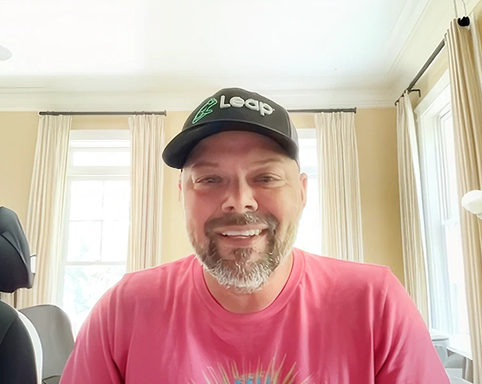
I would highly recommend them to anyone looking to scale quickly or needing support in engineering, product, or QA.
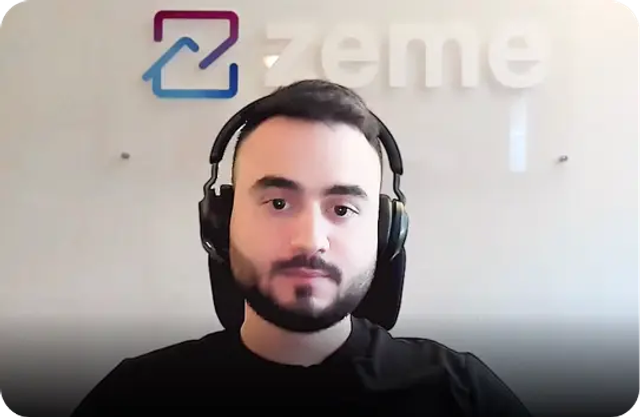
We don't just call them Logiciel; they're part of the Zeme team. Within the first week they were contributing meaningfully to our codebase.

The Logiciel team worked tirelessly and built everything we needed, with security and best practices across our entire platform. It allowed us to become #1 in our industry, and we couldn't have done it without them.

Yes — for US teams that want managed event streaming without per-seat Confluent pricing or per-message bills that punish growth. Confluent is excellent at what it does, but the operational and cost model assumes you have a dedicated platform team and a healthy budget for a strategic platform investment.
Logiciel delivers Kafka-grade durability, exactly-once processing, Schema Registry, and stream processing in a managed service typically 40-60% lower TCO than equivalent Confluent Cloud workloads. For mid-market customers without dedicated Kafka SREs, Logiciel is usually the right choice; for established Confluent customers, migration timing typically aligns with contract renewal cycles.
Yes — Kafka API compatible, so existing producers (Java, Python, Go, .NET clients) and consumers connect with minimal config changes (typically just bootstrap server URLs). Schema Registry compatibility means existing Avro/Protobuf/JSON schemas work as-is.
MirrorMaker 2 compatibility supports cross-cluster replication. The drop-in compatibility means migration from self-managed Kafka or Confluent typically requires no application code changes — your engineering team's existing skills and code transfer directly.
We provide migration tooling for topic export/import, consumer offset translation, and parallel cluster running during cutover. Most customers complete migration in 8-16 weeks with zero application downtime.
Per active stream plus storage volume — predictable at scale, contractually capped, with unlimited consumers. We don't charge per message (which makes Confluent Cloud bills feel arbitrary at high volume) or per consumer (which discourages teams from using streams).
Mid-market customers (5-20 streams, moderate volume) typically pay $20-60K ARR. Enterprise tiers (50+ streams, high-volume, advanced governance, dedicated TAM, US-citizen support) start at $150K ARR. Storage pricing is tiered (hot vs cold) so historical retention doesn't punish your bill.
Pricing is transparent with workload-grounded TCO comparison against Confluent Cloud at evaluation time.
Native — including stateful operations (joins, aggregations, windows). No manual idempotency keys, no dedup tables, no transaction-replay nightmares. Exactly-once is the platform default; you have to opt out, not opt in. Stream processors integrate with transactional sinks (Snowflake, Databricks warehouse writes, transactional Postgres writes, downstream Kafka topics) so the exactly-once contract extends end-to-end.
For US FinTech, billing-critical, and inventory-critical customers, we've passed independent third-party audits on the guarantee. The exactly-once contract is part of the platform SLA, not aspirational marketing copy. We document the contract precisely so audit and risk teams can validate it.
Yes — native CDC connectors from Postgres (logical replication), MySQL (binlog), MongoDB (change streams), SQL Server (CDC), Oracle (LogMiner or Goldengate), and other databases. CDC events flow into Kafka-compatible streams with ordered, exactly-once delivery and full schema evolution support.
This eliminates the typical 'two systems for CDC' pattern (Debezium for capture, separate platform for processing) — Logiciel handles both with shared observability and SLA management. CDC throughput scales with database load; we've supported customers running CDC at hundreds of thousands of events per second across multiple source databases. Schema evolution is policy-driven (auto-evolve, alert, block).
Built-in registry with backward, forward, and full compatibility modes — Avro, Protobuf, and JSON Schema all supported. Compatibility checks run in CI for schema changes, blocking deploys that would break consumers. Subject naming and grouping support multi-tenant patterns.
Schema changes are versioned, auditable, and traceable to the producer team and the change rationale. For regulated customers, schema lineage and change history support audit evidence requirements. Compatibility with Confluent Schema Registry means existing schemas migrate without code changes.
Custom serializers/deserializers are supported through standard interfaces — no proprietary plugin model.
MirrorMaker 2 compatible cross-region replication with configurable topology — active-active for global low-latency, active-passive for DR, hub-and-spoke for centralized analytics. Replication latency is typically sub-second within a cloud provider, low single-digit seconds across cloud providers.
Conflict resolution for active-active uses configurable strategies (last-writer-wins, application-driven). Disaster recovery configurations are tested in customer environments quarterly with documented RTO and RPO. For US customers running global products (e-commerce, FinTech, marketplaces), geo-replication is typically a critical requirement and we have reference architectures for major patterns. Cross-cloud replication is supported with appropriate egress cost transparency.
Talk through your roadmap with our engineering leads - implementation, governance, and security handled as one connected responsibility.