
Zeme · Real Estate
Real Estate
Going from notebook to production breaks most ML teams. Logiciel's ML infrastructure platform handles features, embeddings, training data, and inference - versioned, observed, and integrated with the data infrastructure your engineers already trust.
A feature store with point-in-time correctness. Point-in-time-correct feature stores are the structural difference between training-serving consistency and the bug class that haunts most ML production systems.
Versioned training data and reproducible training pipelines. Versioned training data with reproducible training pipelines is a regulatory requirement under EU AI Act and emerging US frameworks, not just a nice-to-have.
Observability that catches feature drift before model drift. Observability for feature drift, prediction drift, and ground-truth drift catches model degradation before it affects users.
Embedded data engineering pod aligned to your sprint cadence - typically 3–6 engineers + a US lead.
Senior data engineers, architects, and SMEs slotted into your team to unblock specific work.
Fixed-scope, milestone-driven engagements with clear deliverables and outcomes.
We map your stack, workloads, team, and constraints in a working session - not an RFP response.
Reference architecture grounded in your reality, with capacity, cost, and migration plans.
Iterative implementation with weekly demos, code reviews, and your team in the loop.
Managed operations or knowledge transfer - your choice. Both with US-aligned coverage.
Continuous tuning of cost, performance, and reliability against measurable SLAs.
Versioned features with point-in-time correctness.
Batch + streaming embedding generation, versioned.
Versioned datasets, sampling, labeling integrations.
Pinecone, Weaviate, pgvector, Qdrant native.
Batch + real-time inference with observability.
Feature drift, prediction drift, model performance monitoring.


Teams that needed to ship fast, and did. Here's what partnering with Logiciel felt like from the inside.
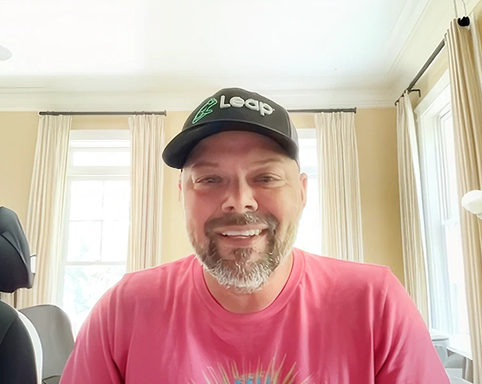
I would highly recommend them to anyone looking to scale quickly or needing support in engineering, product, or QA.
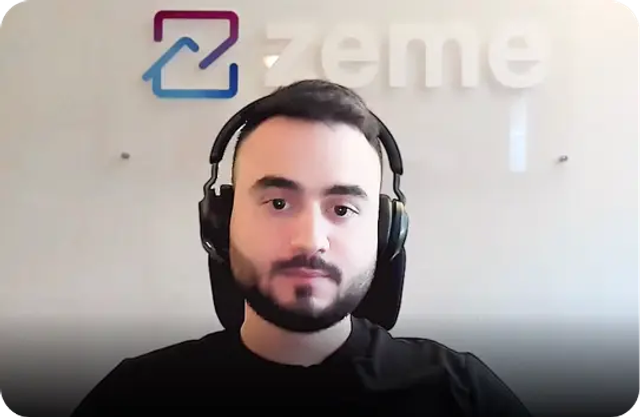
We don't just call them Logiciel; they're part of the Zeme team. Within the first week they were contributing meaningfully to our codebase.

The Logiciel team worked tirelessly and built everything we needed, with security and best practices across our entire platform. It allowed us to become #1 in our industry, and we couldn't have done it without them.

No — we focus on data infrastructure for ML (features, embeddings, training data, inference data) and integrate with model lifecycle tools (Vertex AI, SageMaker, MLflow, Weights & Biases, Comet, Anyscale). The line between ML data infrastructure and MLOps is blurry; we deliberately stay on the data side because that's where most production AI failures originate.
Most customers run Logiciel for the data side and one of the major MLOps platforms for model lifecycle (training, registry, deployment). For customers without an MLOps platform, we have integrations and reference architectures to set one up. We're explicitly not trying to be SageMaker.
We have Feast-compatible APIs, so existing Feast users can adopt Logiciel without code rewrites. Many of Tecton's capabilities — point-in-time correctness, online/offline serving, feature versioning — are first-class in Logiciel. The differentiator: Logiciel's feature store integrates with the broader data infrastructure (catalog, lineage, observability, governance), so features are governed assets, not islands.
For US customers running Tecton today, we provide TCO comparisons that typically show 30-50% savings. For Feast users, we offer managed operations on top of the open-source primitives they're already using. We don't recommend replacing a working Tecton install if features are stable.
First-class assets — versioned, observable, indexed in your vector DB of choice (Pinecone, Weaviate, pgvector, Qdrant, Milvus, Chroma, OpenSearch). Embedding generation pipelines are managed assets with full lineage from source documents through chunking, embedding model invocation, and vector indexing.
Embedding model upgrades trigger versioned retraining workflows; old embeddings sit alongside new until evaluation passes; only then do you cut over consumers. This avoids the silent failure mode where an embedding upgrade improves average quality but breaks specific edge cases.
Embedding cost telemetry is integrated so you can see actual $/embedding across providers (OpenAI, Cohere, Voyage, self-hosted).
Production RAG pipelines: chunking, embedding, retrieval, evaluation — all observable assets with versioning and lineage. Common patterns: document ingestion (PDF, HTML, structured data) → chunking strategies (semantic, fixed-size, hierarchical) → embedding generation (multiple providers supported) → vector indexing → retrieval with reranking → generation with optional eval.
Each stage is a managed asset with SLAs and observability. Eval pipelines (Ragas, TruLens, DeepEval, custom) integrate as observable assets with results trackable over time. For regulated AI customers (EU AI Act, emerging US AI rules), the lineage and eval evidence supports auditability requirements that pure RAG demos can't satisfy.
Both — same feature definitions for training and serving, eliminating training-serving skew that's a leading cause of production model failure. Online serving via REST/gRPC API with sub-100ms latency for typical features; offline serving via warehouse SQL or Python notebook for training.
Feature definitions are point-in-time correct, so training data assembly respects historical reality (no 'leakage from the future'). For US customers with mixed online and offline ML use cases, the unified feature definition eliminates a class of bugs that's notoriously hard to debug in pure offline-first or online-first architectures. We support both batch and streaming feature pipelines.
Feature drift, prediction drift, and ground-truth drift are all observed and alerted with statistical tests appropriate to each (KS test for continuous distributions, chi-square for categorical, JS divergence for general distribution shifts).
Drift detection is per-feature and per-model with configurable severity thresholds. Alerts route through lineage-aware channels — when an upstream data source drifts, the upstream owner and downstream model owners are notified simultaneously.
For customers with regulatory model risk requirements (financial services SR 11-7, EU AI Act high-risk systems), drift evidence supports model validation and post-market monitoring requirements. Drift monitoring is included in the platform, not a separate SKU.
Per active feature/embedding pipeline plus storage volume — predictable at scale, with unlimited model serving consumers. Mid-market customers (50-200 features, moderate online serving volume) typically pay $40-90K ARR. Enterprise tiers (1,000+ features, high-volume online serving, advanced governance, dedicated TAM, US-citizen support) start at $200K ARR.
Compute is your cloud bill, passed through at cost; we don't markup compute. Online serving traffic is metered separately at low per-request rates. Pricing is transparent with workload-grounded TCO comparison against Tecton or self-managed Feast at evaluation. For Tecton replacement scenarios, savings are typically 30-50%.
Bring your roughest production ML workflow. We'll architect it on Logiciel in a 60-minute working session - feature store, training pipeline, inference, observability.