
At a high level, your data platform has expanded tremendously. There are now existing pipelines for processing datasets, and multiple departments within your organization are creating new datasets.
Yet the current state of this organization’s data infrastructure management is failing.
Metrics between departments do not agree on their individual datasets. There is no clear ownership of the individual datasets. And the leadership of the organization is beginning to have doubts whether the data infrastructure management model is working at all.
A Data Pipeline Architecture Template to Stop Paying the Bad-Data Tax
Build cleaner data pipelines that reduce the cost of poor data.
At this point, it becomes apparent that the organizational design you’ve implemented has become a technical issue.
As a VP or Head of Data, this guide is meant to support your journey to:
- Understand the trade-offs between centralized and federated data engineering team structures;
- Identify which structure is best suited for your organization’s specific level of growth and maturity; and
- Make a well-informed decision that not only provides autonomy for the team but also creates a more reliable solution.
You can see how the design of your organization impacts the scalability of your data systems.
Why This Comparison Will Matter to Data Infrastructure Management in 2026
Historically most organizations operated under the centralized data engineering model.
That has changed.
Current Importance of the Decision-Why "Now"?
Modern Data Infrastructure Management Must Support:
- Workloads using AI and ML;
- Forrester’s Research & Advisory Group’s definition regarding 'real-time' data analytics; and
- Support rapidly developing business domains.
These 3 considerations introduce increased numbers of stakeholders as well as increased numbers of data pipelines which in turn create greater complexity.
Who Makes This Decision?
Typically, the following roles are responsible for deciding on the centralization/federation of data engineering teams:
- VP of Data
- CTO
- Head of Engineering
The risks that come with making the wrong decision are great. If the wrong choice is made, fragmentation or bottlenecks could result. If the correct choice is made, there are systems that could be scalable and reliable.
The Central Trade-Off
- Centralized: Control and Consistency
- Federated: Speed & Autonomy
Neither structure is better than another
Key Point
The appropriate organizational structure of a "best" team is based on:
- Size of the company
- How mature the company's data is
- The complexity of the product
Understanding Centralized Data Engineering Teams
What Are Centralized Teams For?
Centralized teams have the responsibility to:
- Own all of the pipelines that send data to and from every system/solution used by a company.
- Manage the entire data platform - all the systems or solutions that are required to create, maintain, and display data
- Enforce that all data-related work gets done to the same or similar standards in every area of the company
Strengths of Centralized Teams
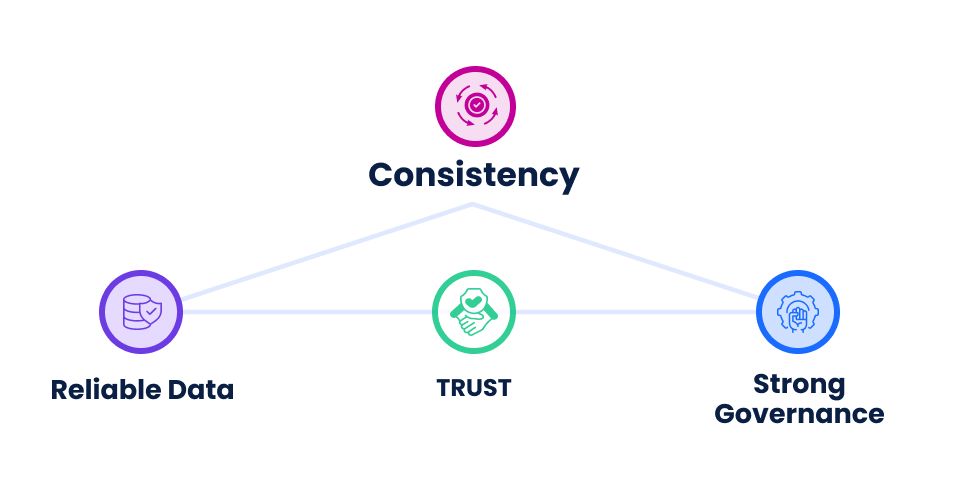
1. Consistency
Centralized teams provide a standardized way to send data to and from every system or solution and have processes in place to ensure everyone in an organization uses the same set of key performance indicators (KPIs) to measure success.
2. Strong Governance
Centralized teams provide clear ownership of data, which improves accountability for compliance with rules and regulations governing the handling and storage of data.
3. Easily Reliable Data
Centralized teams manage the delivery of all data entering, leaving, or existing within the data platform, and decreasing fragmentation.
Limitations of Centralized Teams
1. Bottlenecking
Centralized teams produce a lot of data, which can create a traffic jam when they cannot handle the high volume of data requests being made by other areas of the company. Therefore, there is a delay in the delivery of the requested data.
2. Domain Context is Limited
In some cases, centralized teams cannot fully understand the nuances of any one domain.
3. Centralized Teams Are Not Suited for Scale
A centralized team can struggle to support a large number of different domains.
When Centralized Teams Break Down
As businesses continue to grow and expand their scope of services, the number of requests received by centralized teams can exceed their capacity to fulfill all of the requests being made. Therefore, some organizations will implement workarounds and ultimately create "shadow" data systems.
The Best Use of a Centralized Team
Centralized teams work best for:
- Small or mid-size organizations
- Limited use cases for data
- Early-stage maturity of data
Key Point
Centralized teams are best suited for optimizing control and reliability over large amounts of data; however, they can also slow down innovation.
Understanding Federated Data Engineering Teams
What Are Federated Teams For?
A federated model distributes ownership of data pipelines across various domains through a central data engineering team. The central data engineering team provides the infrastructure that all of the data pipeline-related technical work is conducted on.
Strengths of Federated Teams
1. Speed
Teams are able to create data pipelines independently from one another.
2. Domain Expertise
Teams that create data pipelines are responsible for creating them and therefore will have an excellent understanding of how their data can be used.
3. Scalability
The total volume of work that is generated is dispersed among all of the teams, which will allow the federated data engineering teams to operate at maximum efficiency.
Limitations of Federated Teams
1. Variations in Standards
Since different teams are allowed to create their own data pipelines independently, the standardization of data pipelines can suffer.
2. Fragmented Data
Since different teams are allowed to create their own data pipelines independently, the ability to consolidate datasets can be limited.
Governance Challenges
Policy Enforcement
Where Governance Fails
Governance Breakdown is Attributed to
- A lack of proper governance framework or
- No alignment between metrics
- Poor data quality, and
- A best fit model.
Key Point
Federated models are ideal for:
- Large organizations
- More experienced data centric organizations
- More complicated product environment
What We Need to Know
Federated teams:
- Have the capability to scale and have an optimized execution cycle
- Have a need for enhanced coordination
Here's the Comparison Between Centralized Models and Federated Models
Centralized | Federated
Work At Scale | Limited to Size of Team | Work At Scale | Scales With The Organization
Data Consistency | High | Medium
Speed of Delivery | Slow | Faster
Cost of Ownership | Lower Tooling/ Higher Congestion | Higher Tooling/Lower Congestion
Operational Complexity | Lower | Higher
Governance | Easier | More Complex
What This Means for Each Model
Centralized Models Reduce Variability; | .
Federated Models Increase Agility/Variability
There Is Always A Trade-off:
Control Versus Independence
What We Need to Know
Your Selection Will Depend Upon Your Long-Term Sustainable Growth? Or Your Short-Term Efficiency
When Choosing To Use A Centralized Model
Centralized:
- Less than 5 people on the team;
- Have Limited Data Use Cases; and
- You Have Strict Requirements For Governance
If You Are Considering Using A Centralized Model, Consider:
- Is Data Frequently Inconsistent;
- Is There Unclear Data Ownership;
- Is There An Early Stage Infrastructure?
When Not To Choose Centralized
If Any Of The Following Is True; Do Not Utilize A Centralized Model:
- Your Teams Are Unconnected/Dropped In A "Waiting" Queue For Data
- Projects Are Changing Or Moving Through Cycles Faster
- Your Agency Is Growing Rapidly
Common Issues Experienced By Organizations That Have Remained In A Centralized Model Are:
- Congestion Rates Increase
- Teams Are Developing Workarounds (Shadow Systems) | .
Key Point
At The Early Stage, Centralized Operations Provide Value; Eventually They Create A Limitation When Moving Toward Growth.
When Should You Use the Federated Model and When Should You Avoid it?
Choose the Federated Structure When:
You have a large organization with multiple teams that require autonomy.
You have a large number of teams working with complex data.
You observe the following behaviors that indicate your organization has high demand for data across multiple teams, has good engineering maturity, and has established governance frameworks.
Reasons to Not Use the Federated Model
Avoid federated models in your organization if:
- There are no standards set for working with data.
- There is a lack of experience or expertise with working with data in your teams.
- There is weak governance around data.
Common Regret Scenarios
Moving to a federated model too early results in fragmented systems and decreased trust in the data.
How Logiciel Helps
With the use of Logiciel’s platform for centralized governance, federated execution and unified observability, organizations can achieve:
A means by which to scale their operations while still providing a controlled environment for managing data.
The Bottom Line
Selecting the right structure for your teams to work within is important to effectively manage your data infrastructure.
Key Highlights
- A centralized model works well for providing control and managing early-stage teams.
- A federated model allows for speed and scalability, but with added complexity.
- Combining both centralized and federated models is typically the best structure for organizations.
These decisions are not necessarily permanent, as organizations continue to evolve.
The goal should be to create a structure that:
- Provides for scalable growth within your business.
- Maintains the trustworthiness of data.
- Addresses the need for making faster decisions.
The Governance Operating Model That Cuts Compliance Incidents
Apply federated governance and automated enforcement to reduce compliance incidents.
Call to Action
If you are evaluating your current structure, consider the following two resources:
- Root Causes and Solutions to Why Your Data Infrastructure Is Constantly Breaking.
- How to Present a Business Case to Your CFO Regarding Investment in the Data Infrastructure.
If you have not already, take the next step in evaluating your data infrastructure management capabilities by:
👉 Reviewing Logiciel’s platform to learn how we can support you in managing scalable data infrastructure.
At Logiciel Solutions, we design systems for organizations that combine the following common elements:
- Accountability
- Scalability
- Reliability
Protocol allows your data teams to expand without destroying the infrastructure supporting the data.