
Your data pipelines are operating as expected, and dashboards are producing live data, yet something is not functioning properly.
The data produced by measures taken to visualise real time activities is frequently viewed with a lack of trust by stakeholders, engineers are required to constantly put out multiple fires, and every additional feature that is added is causing new instabilities.
The fact that your organisation is experiencing signs of these issues indicates it is lacking intelligent data infrastructure best practices.
Why Patient-Critical Systems Need Data Observability, Not Just Uptime
Detect critical data issues before they compromise patient care.
As a Head or VP of Data, you will learn from this article how to:
- Differentiate between high performing data teams and reactive data teams
- Identify key, non-negotiable best practices for modern intelligent data infrastructure
- Recognise the silent anti-patterns that are degrading your systems reliability
As we progress through to the year 2026, data infrastructure will not simply represent scale; rather, it must also represent intelligence, resilience and adaptability.
The State of Intelligent Data Infrastructure in 2026 and Why the Best Practices Also Matter Now
The data infrastructure landscape has become extremely different than it has previously.
What has Changed Current Day
Modern Data Systems Are:
- Distributed Across Many Platforms
- Facilitating Real-Time Workloads (i.e. AI)
- Handling Huge Amounts of Data
The Long-Term Effects of These Differences Have Been:
- Increased Dependencies on Systems to Perform
- Increased Points of Failure
- Increased Expectations From Users/Systems
The Gap Between Data Teams
How High Performing Teams Work
- Built from Reliability from the First Day
- Prioritised Observability
- Have Automated Their Critical Processes
How Unsuccessful Performing Teams Work
- React to Incidents
- Have Manually Check Processes
- Have Built up Technical Debt
Important Data Point
Research from the Industry States that organisations that Work in Observability and Automation Will Decrease the Time to Resolve Issues by 60% Or More.
The Importance of Best Practices
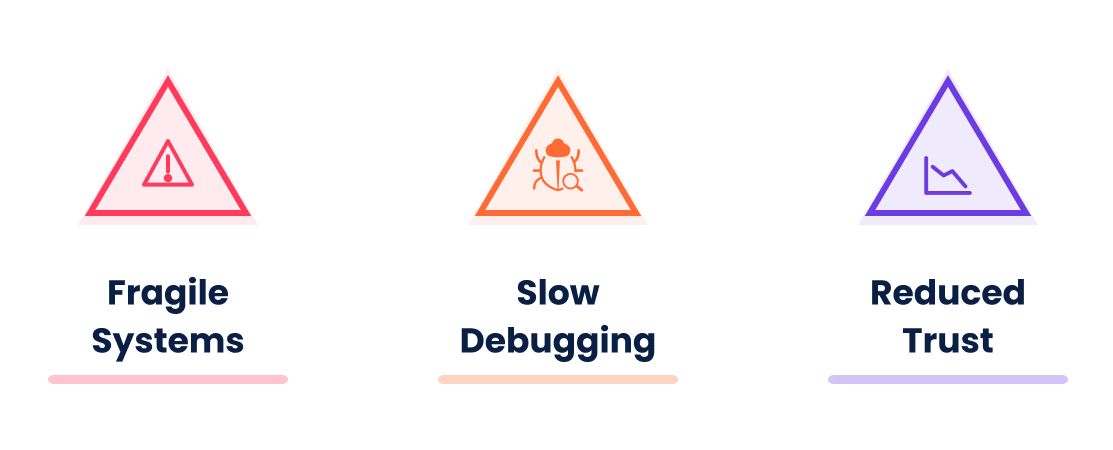
Without an organized and intelligent data model, best practices lead to:
- Fragile systems
- Slow debugging
- Reduced trust
With an organized and intelligent data model, best practices lead to:
- Reliable and scalable systems
- Faster team movement
- An opportunity for data to be leveraged as a competitive advantage
Best Practices are Non-Negotiable: All Teams Must Get These Fundamentals Down First
Before any advanced strategy can be implemented, teams must establish core fundamentals.
1. Ownership
All datasets and pipelines must have a defined owner as well as documented responsibilities related to that ownership to help ensure accountability.
2. Observability From Day 1
Observability must include pipeline health, freshness of data, and detection of error conditions. Adding these capabilities after the fact will add cost and create complexity.
3. Infrastructure as Code
View infrastructure as software. Control versions of configuration and have reproducible environments to help produce consistency and reliability.
4. Defined Service Level Agreements
Prior to any production environment being utilized, set expectations regarding uptime, define acceptable latency, and establish accuracy thresholds.
KEY INSIGHT:
The above fundamentals form the foundation of any data platform; without these fundamentals, it is impossible for an advanced data platform to be successful.
Practice 1: Design for Failure at the Beginning
It is inescapable that there will be failures with distributed systems; therefore don’t try to keep failures from occurring but rather design for graceful failure.
What this means is to assume that components will fail, plan for recovery, and minimize impact.
Key Techniques:
Retry and Fallback
Automatically retry upon failure; and employ fallback mechanisms when necessary.
Dead-Letter Queues
Capture bad data but do not allow them to stop the data-flow pipeline.
Circuit Breakers
Prevent cascading failures from occurring down the line; and provide protection for downstream systems.
Testing for Failure
Simulate occurring events such as:
- Pipeline interruptions
- Data corruption
- Service outages
Create a plan for if these events occur.
Alerting Strategy
Alert for SLA breaches and data anomalies; do not just alert customers for system failures.
Insight #1
Data reliability, downtime reduction via failure-focused design.
2nd Practise: Quality Assurance via Automation.
Automation of manual checks is critical for scalable data quality management.
Combining Shift Left data quality vs. Downstream Failures through the prevention of Ingestion-based and Pre-transformation-based issues.
Automated Quality Assurance Checks:
- Schema
- Nulls
- Ranges
Data Contracts
Defining the Following:
- Expected Schema
- Data Format
For consistency in production and consumption.
Before - Example:
Schema alteration anywhere will result in a silent failure downstream.
After - Example:
- Validation - detects Schema Change
- Confirmation - alerts sent immediately
Logiciel assistance results from the following:
- Automated Quality Assurance Rules
- Continuous Validation
- Real-time Alerts
Insight #2
Transforming Data Quality from Reactive to Proactive through Automation.
3rd Practise: Observability and Explainability of Your Stack.
Observability is the bedrock of intelligent systems.
What is Included within Observability:
- Pipeline Monitoring
- Freshness of Data
- Error Detection
Function of Lineage --Traceability as Source --> Destination
Traceability to Understand Data Dependency to facilitate Faster RCA.
Benefits of Strong Observability within Your Team:
- 60%+ reduce in INC resolution
- Improve Reliability of System
- Increase Trust of Data within System
Observability Unified as One Layer:
- Avoided = Many Individual Monitoring Tools
- Use = Integrated versus Multi-Tool for One Complete View of Pipeline health
Business Impact Through Improved Observability:
- Faster Decision Making
- Decreased Downtime
- Higher Confidence in Data
Insight #3
Observability is a core infrastructure capability versus one feature.
Anti-Patterns to Avoid: Factors That Erode Reliability
Even if you’ve implemented all best practices for your system, there are still some patterns that will cause you trouble.
1. Large, Complex Pipelines
Large, complex pipelines are difficult to debug and can lead to more extensive failures than smaller, simpler pipelines.
2. Manual Data Validation
The biggest problem with manual data validation is that it does not scale. Additionally, it has a higher likelihood of making mistakes compared to automated validation.
3. Too Many Tools
When you have too many tools being used, it creates more complicated solutions and less transparency across the ecosystem.
4. Reactive Investment
Waiting until an incident occurs to make an investment in your system can lead to a higher total cost for the infrastructure and will slow down the overall progression of your project.
Key Takeaway
Avoiding anti-patterns is just as important as implementing best practices.
Final Thought
In order to create intelligent systems, we must have more than just ways of doing things; we need discipline and design.
Key Points of Best Practices:
- Best practices provide a foundation; therefore, building an intelligent system cannot be done without them.
- Best practices keep your systems from becoming complicated; they do not create chaos.
- Automation and observability are critical to maintaining proactive systems versus merely reacting to them.
- They compound very quickly and can be expensive over time.
This is not something you can do once and forget about; it is an ongoing process.
How an Energy Company Stopped Paying for Silent Data Quality Failures
Detect silent data quality failures faster and reduce operational risk.
If your infrastructure has been implemented properly, your intelligent infrastructure will allow:
- Increased reliability
- Accelerated innovation
- Increased trust in data
To do this, call Logiciel Solutions for a consultation on how to rebuild your infrastructure.
Logiciel Solutions provides organizations with the ability to build their own AI-first intelligent data systems that can be effectively scaled.
We will work with you using:
- Technical implementation
- Intelligent automation
- Proven methodology
In order to transition you from a reactive to a predictable, high-performing infrastructure.