
Zeme · Real Estate
Real Estate
AI chatbot development services for customer support and digital products. Build secure chatbots with RAG, integrations, and human handoff.
We design chatbot experiences around the actual questions users ask and the systems needed to answer or resolve them.
mapping common questions, task paths, clarifications, fallback responses, and escalation points before implementation
connecting product documentation, policies, knowledge bases, and relevant records through permission-aware retrieval
linking the chatbot to approved CRM, support, order, booking, and application APIs where the workflow requires them
controlling identity, data exposure, retention, tool permissions, and access to account-specific information
routing uncertain, sensitive, or unresolved conversations to staff with context so customers do not start over
evaluating intent coverage, grounded answers, resolution, escalation, latency, customer friction, and operational cost
adding analytics, versioning, monitoring, feedback loops, fallback behavior, and controlled updates as knowledge changes
AI, software, data, UX, and QA specialists work across conversation design, retrieval, integration, evaluation, deployment, and improvement.
Specialists strengthen your existing product or support team with RAG, model integration, conversation testing, security, and production engineering.
A focused engagement builds or improves one support, product, employee, or knowledge chatbot against defined user journeys and acceptance criteria.
We identify users, high-volume intents, information sources, desired actions, failure scenarios, and human handoff rules before designing the experience.
We build chat interfaces, backend services, session state, conversation flows, APIs, and application integrations suited to your channels and users.
We connect approved content through ingestion, search, retrieval, citations, and source updates so answers can be checked against current knowledge.
We integrate chatbots with authorized service platforms, customer systems, order data, ticketing, and internal APIs through controlled interfaces.
We implement identity-aware access, data boundaries, tool restrictions, escalation triggers, conversation handoff, and appropriate logging controls.
We test realistic questions, ambiguous requests, incorrect premises, retrieval quality, access boundaries, handoff, latency, and failure handling.
We monitor unresolved intents, response quality, fallback rates, latency, costs, and user behavior to guide improvements after launch.
A framework for deciding which questions a chatbot can resolve, which require system access, and which must reach a human.
A method for evaluating factual support, helpfulness, correct escalation, clarity, latency, and task outcomes on representative conversations.
A model for separating information responses, approved system actions, identity checks, and situations that require staff intervention.
We review support demand, user journeys, knowledge gaps, existing channels, system dependencies, and escalation requirements.
We define intent paths, model access, retrieval, session state, permissions, integrations, handoff, and success measures.
We implement the interface, application services, RAG, approved APIs, conversation logic, logging, and escalation workflows.
We evaluate representative questions, ambiguous requests, sensitive information, integration failures, grounded answers, and handoff quality.
We track resolution, unresolved intents, quality, latency, cost, and customer friction while updating knowledge and conversation flows.


Teams that needed to ship fast, and did. Here's what partnering with Logiciel felt like from the inside.
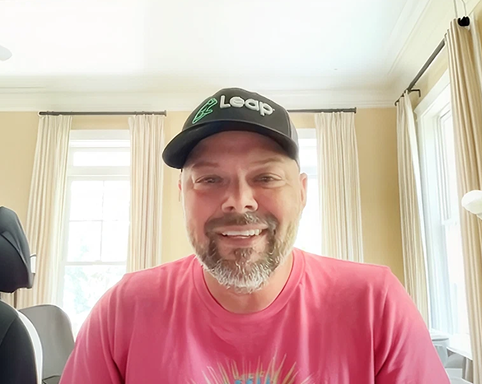
I would highly recommend them to anyone looking to scale quickly or needing support in engineering, product, or QA.
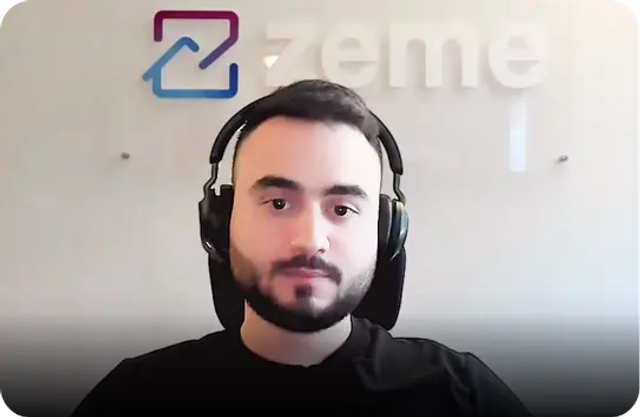
We don't just call them Logiciel; they're part of the Zeme team. Within the first week they were contributing meaningfully to our codebase.

The Logiciel team worked tirelessly and built everything we needed, with security and best practices across our entire platform. It allowed us to become #1 in our industry, and we couldn't have done it without them.

They cover the design, development, integration, testing, and operation of chat-based AI applications. Typical work includes conversation design, model access, RAG, business-system integration, security, and human handoff.
A chatbot is a conversational interface that primarily helps users ask questions or complete guided tasks. An agent may execute multi-step workflows and use tools with bounded autonomy. A chatbot can incorporate agent capabilities when the use case justifies them.
Yes. Retrieval-augmented generation can connect a chatbot to approved documentation and knowledge sources. Access permissions and source freshness need to be enforced in the retrieval and application layers.
Yes. Integration can provide authorized context, ticket creation, case updates, and handoff. Available actions depend on the APIs, permissions, and business rules of the connected systems.
We use grounded retrieval, context boundaries, evaluation sets, refusal and clarification behavior, source visibility, and escalation when reliable information is unavailable.
Yes. Chatbot application development can support websites, mobile products, internal portals, and other channels through a shared backend and channel-specific interfaces.
We track resolution and escalation rates, intent coverage, grounded-answer quality, latency, cost, repeated questions, and user feedback, then use the findings to improve the experience.
Bring us the questions, support workflows, or product experience you want to improve. We will map the knowledge, integrations, controls, and measurable next steps.