
Zeme · Real Estate
Real Estate
Computer vision development services for retail inventory visibility, visual search, shelf monitoring, checkout, store analytics, and custom vision software.
We combine computer vision, machine learning, retail data engineering, and software development to build visual AI around real store and ecommerce workflows.
focused on availability, merchandising, discovery, operations, checkout, or customer experience
using representative shelves, products, packaging, cameras, lighting, layouts, and edge cases
across classification, detection, segmentation, tracking, OCR, similarity, or multimodal techniques
that turns detections into alerts, inventory updates, merchandising actions, analytics, or application experiences
for uncertain detections, exceptions, ambiguous products, or workflows where model errors carry higher cost
across cloud, edge, mobile, in-store devices, or hybrid environments based on operational requirements
as stores, SKUs, cameras, users, channels, and visual workflows grow
A cross-functional team works across use-case discovery, visual data preparation, model development, retail integration, evaluation, deployment, and monitoring.
Computer vision developers, machine learning engineers, data engineers, and software specialists strengthen your team across architecture, models, pipelines, and implementation.
A focused initiative built around a defined use case such as shelf monitoring, visual search, product recognition, store analytics, or checkout assistance.
We define the visual problem, target outputs, store or digital environment, available imagery, workflow requirements, operational constraints, and success criteria.
We prepare, clean, organize, label, and evaluate shelf, product, store, packaging, and video datasets so they reflect production conditions.
We design, train, fine-tune, and evaluate models for product recognition, detection, segmentation, tracking, OCR, similarity, and other visual retail tasks.
We connect vision outputs with POS, inventory, ecommerce, product information, merchandising, analytics, mobile, API, and store systems.
We design deployment around store connectivity, camera infrastructure, latency, processing volume, hardware, scalability, and cost requirements.
We test representative products, stores, packaging changes, occlusion, false positives, false negatives, confidence thresholds, and review flows.
We monitor prediction quality, data drift, product changes, camera variation, failures, latency, throughput, and infrastructure cost after deployment.
A practical framework for ranking visual AI opportunities by manual effort, store impact, visual consistency, data availability, implementation complexity, and measurement potential.
A structured way to decide which computer vision approach best matches the retail information or customer experience a workflow needs.
A framework for dataset coverage, SKU variation, model quality, confidence thresholds, edge cases, human review, drift, latency, and production monitoring.
We identify what the system needs to recognize, where imagery comes from, who uses the output, and which store, ecommerce, or operational outcome should improve.
We assess product imagery, store footage, camera conditions, labels, packaging variation, class balance, edge cases, historical coverage, and data gaps.
We define model approaches, data pipelines, processing requirements, confidence thresholds, retail integrations, deployment environment, and evaluation criteria.
We develop the computer vision software, connect required retail systems, test representative products and store conditions, and validate model and workflow performance.
We monitor production predictions, model drift, packaging changes, store variation, failures, latency, and throughput while improving models using real operating data.
Teams that needed to ship fast, and did. Here's what partnering with Logiciel felt like from the inside.
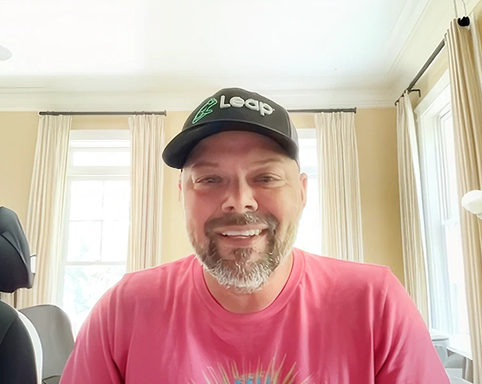
I would highly recommend them to anyone looking to scale quickly or needing support in engineering, product, or QA.
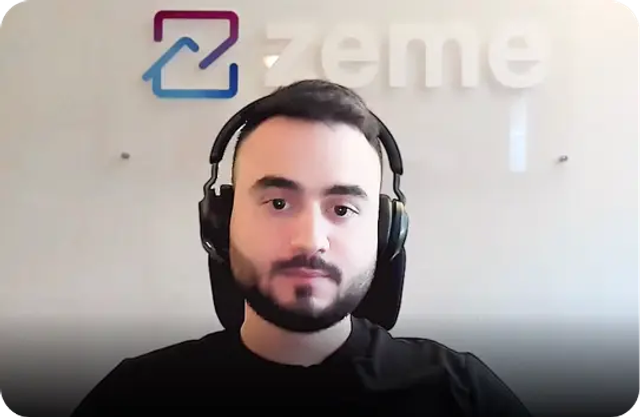
We don't just call them Logiciel; they're part of the Zeme team. Within the first week they were contributing meaningfully to our codebase.
The Logiciel team worked tirelessly and built everything we needed, with security and best practices across our entire platform. It allowed us to become #1 in our industry, and we couldn't have done it without them.

Computer vision development services for retail involve building software that can analyze product, shelf, store, and customer-facing visual data to recognize items, detect conditions, support monitoring, enable visual search, and automate defined workflows.
Common use cases include shelf monitoring, product recognition, out-of-stock detection, visual search, display compliance, checkout assistance, inventory workflows, store analytics, and embedded visual features.
Yes. Computer vision can be trained to detect or classify defined products and shelf conditions using representative images. Performance depends on packaging similarity, occlusion, image quality, shelf density, and dataset coverage.
Yes. Visual search can use image embeddings, similarity models, product metadata, and catalog information to help users discover visually related products from an uploaded or selected image.
Yes. Depending on available interfaces, computer vision software can integrate with POS, inventory, ecommerce, PIM, merchandising, analytics, mobile, API, and other retail systems.
It depends on latency, connectivity, camera infrastructure, processing volume, privacy, hardware, and cost requirements. Some retail workloads fit cloud processing, while others benefit from edge or hybrid deployment.
Evaluation can include precision, recall, false positives, false negatives, recognition accuracy, detection quality, latency, throughput, and workflow-specific outcomes. The right metrics depend on the cost of each type of error.
Build computer vision software that can recognize products, monitor shelves, analyze visual conditions, and connect those insights to the retail workflows where they matter.