
Zeme · Real Estate
Real Estate
Logiciel helps enterprises move AI from proof of concept to production with practical engineering, governance and operating discipline. From pilot validation and production architecture to MLOps, LLM integration, workflow automation, observability and managed operations, we build AI systems that perform reliably beyond the first demo.
Most enterprises do not fail because AI pilots lack potential. They fail because pilots are not designed for real users, changing data, security requirements or production workloads.
Evaluation of existing pilots across business value, technical maturity, data readiness, integration depth and production risk.
Secure and scalable architecture for AI applications, LLM systems, model workflows, APIs, cloud infrastructure and enterprise integrations.
Repeatable deployment workflows, CI/CD pipelines, model registries, validation gates, rollback plans and release automation.
Production-grade data pipelines, vector databases, retrieval systems, embeddings, quality controls and model-ready data foundations.
Integration of AI pilots with CRMs, ERPs, SaaS platforms, internal tools, analytics systems and operational workflows.
Access permissions, audit trails, approval workflows, human review checkpoints, monitoring and compliance-aligned AI practices.
Ongoing monitoring, cost review, model evaluation, reliability engineering, incident response and continuous improvement.
A standing team of AI engineers, data engineers, MLOps specialists, cloud experts and product engineers embedded into your scaling roadmap.
Senior AI architects and production engineering consultants who strengthen your internal product, data, platform or engineering teams.
Fixed-scope engagements with defined production goals, delivery milestones and success baselines agreed up front.
Patterns from our AI-first engineering teams that help enterprises scale AI beyond isolated pilots.
How we structure ownership, deployment controls, governance, observability, incident response and continuous improvement across AI systems.
A practical approach to ranking AI pilots by business value, data readiness, technical maturity, integration complexity and production risk.
We assess the pilot, workflows, data sources, model behaviour, integrations, monitoring gaps, governance needs and business priorities.
We identify what must change across architecture, data, infrastructure, security, observability and operations before scaling.
We build production AI systems, data pipelines, deployment workflows, retrieval layers, APIs and secure enterprise integrations.
We harden AI systems with monitoring, drift detection, access controls, audit trails, alerts, runbooks and operational reporting.
We hand over a repeatable scaling practice, including ownership, KPIs, dashboards, release cadences, incident response and improvement workflows.


Teams that needed to ship fast, and did. Here's what partnering with Logiciel felt like from the inside.

I would highly recommend them to anyone looking to scale quickly or needing support in engineering, product, or QA.
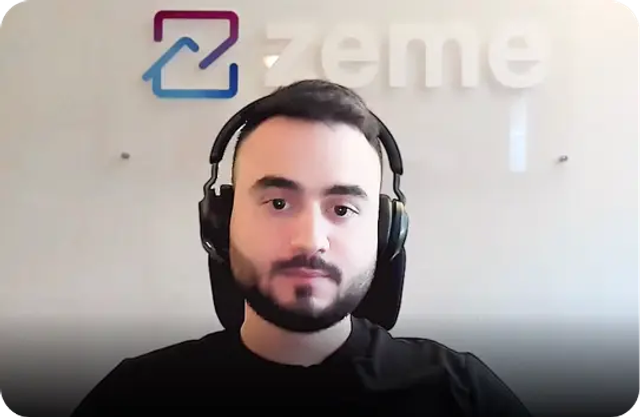
We don't just call them Logiciel; they're part of the Zeme team. Within the first week they were contributing meaningfully to our codebase.

The Logiciel team worked tirelessly and built everything we needed, with security and best practices across our entire platform. It allowed us to become #1 in our industry, and we couldn't have done it without them.

Pilot-to-Production AI Scaling Services include pilot assessment, production architecture, AI engineering, data pipelines, MLOps, deployment automation, governance, observability, reliability engineering and managed production operations.
AI pilots often fail to scale because they are built without production architecture, reliable data pipelines, system integration, governance, monitoring, security controls or a clear operating model.
Most engagements produce a scaling diagnostic and production roadmap within 2-4 weeks, while full production rollout usually runs across phased delivery waves over several months.
Yes. We can assess, refactor, integrate and productionize AI pilots built by internal teams, external vendors or existing data science groups depending on the architecture and business goals.
Yes. We offer milestone-based pricing once scope, pilot maturity, KPIs, production requirements, integrations and delivery milestones are agreed.
You retain ownership of all AI systems, workflows, prompts, models, pipelines, integrations, infrastructure, dashboards, runbooks and implementation materials.
We implement access controls, audit trails, human approval workflows, model monitoring, data protection, documentation and compliance-aligned deployment practices.
Yes. We run managed operations with SRE, observability, incident response, cost review, model evaluation, performance tuning, drift monitoring and continuous improvement.
Ready to turn Pilot-to-Production AI Scaling Services into a reliable path from experimentation to enterprise value? Partner with Logiciel to productionize AI pilots, integrate them into real workflows and operate them with the discipline business-critical systems require.