

Logiciel Solutions Contact Us
View all capabilities
Offshore Software Development
Offshore Development CompanyOffshore Software Development Services CompanyOffshore Software Development ServicesSaaS Engineering Services CompanyFull Stack Development ServicesWeb Application Development ServicesMobile App Development ServicesCustom Mobile App Development CompanyCustom CRM Development ServicesTechnical Debt Management ServicesCodebase Modernization Services
Product & Development Insights
Product Lifecycle Management for GenAI SoftwareSoftware Development Life Cycle vs Product Life CycleData Engineering vs Software EngineeringData Engineering Best PracticesBest Data Engineering Companies
Insights & Trends
Top AI Software CompaniesAI Software Development Trends 2025AI Software Development Pricing & ROI GuideQA Software Testing Explained for CTOsHow QA Testing Companies Structure EngagementsApplication Testing Across SDLCChoosing a QA Company
UI/UX Design
UI/UX Design & DevelopmentUser Experience Design ServicesUI Design OnlineUI/UX Design ServicesConversion Rate Optimization AgenciesEcommerce CRO ServicesWebsite Conversion Optimization FrameworkCRO Consultants vs In-houseCRO Engagement Models by Region
Enterprise AI Solutions
AI Compliance & SecurityAI Software Development ServiceAI Software Development SolutionsAI Software Development for SaaS CompaniesAI Software Development for PropTechAI Software Development Services for SaaS & PropTechGenerative AI Development CompanyAI & Data Engineering ServicesHire AI Software EngineersAI-Powered Automation ServicesAI-Powered Product Engineering Teams
Compare Logiciel
Logiciel vs LeewayHertzAI Software Development AlternativesLogiciel vs BairesdevLogiciel vs EleksLogiciel vs ThoughtbotEcommerce Company vs Agency
AWS Services
AWS Cost OptimizationAWS Database ServicesAWS CI/CD Pipeline AutomationAWS Cloud MigrationAWS DevOps ServicesAWS Managed ServicesAWS Services for Data Engineering
Construction Software
Construction Management SoftwareConstruction Supply Chain SoftwareConstruction Project Management SoftwareConstruction Management Software CompanyConstruction Industry Software SolutionsConstruction Company Project Management SoftwareProject Management Software for Small Construction CompanyConstruction Management Software for Small BusinessLandscape Construction Management SoftwareProcore Construction Management SoftwareConstruction Management System SoftwarePayroll Management Software for Construction & Real Estate
Agentic & Custom AI
AI Agent DevelopmentCustom AI Software DevelopmentAI MVP DevelopmentAI Software Pricing 2025Agentic AI ApplicationsAgentic AI DevelopmentAI in DevOps & Cloud OptimizationAI-Powered DevOps ServicesAI-Powered DevOps Automation ServicesAI in Legacy Modernization
Finance & HR
Magento DevelopmentData ModernizationQA Testing ServicesData Engineering vs AnalyticsAdobe Commerce MigrationData Engineering SolutionsConstruction PM SoftwareData Engineering USAAWS Security ConsultingData Engineering as a ServiceData Engineering ProvidersData Engineering CompaniesDevOps Automation
DevOps & CI/CD
DevOps CI/CD ServicesCI/CD Pipeline Development ServicesCI/CD Pipeline Security Services
Data Engineering
Data Engineering Services CompanyData Engineering CompanyData Engineering PlatformData Engineering & AnalyticsData Integration Engineering ServicesReal-time Data Pipeline Development ServicesSoftware & Data EngineeringSoftware & Data Engineering Technology
Chicago
Custom Software DevelopmentSoftware Development Services
About Contact Us
AI-first engineering

Recommendation Engine Development.

Recommendation engine development services for personalized products, content, next-best actions, discovery, and customer experiences using behavioral and contextual data.

Get started

See Logiciel in action.

Tell us what you're building and we'll take it from there.

15+
Years building production software
120+
Engineers across delivery pods
75+
Clients served in North America
3K+
Successful product releases
Why Logiciel

Why Recommendation Engines Need More Than Similarity Scores.

Why Logiciel · 01

User intent changes with context, timing, behavior, lifecycle stage, and the decision they are trying to make.

Why Logiciel · 02

Useful recommendation signals are often fragmented across applications, transactions, product data, CRM, analytics, and other systems.

Why Logiciel · 03

Popularity-based recommendations can repeatedly surface the same items while missing what is relevant to an individual user.

Why Logiciel · 04

New users and new items create cold-start problems when historical interactions are limited or unavailable.

Why Logiciel · 05

Recommendations often need to respect availability, eligibility, permissions, pricing, inventory, and other business constraints.

Why Logiciel · 06

A model can perform well offline and still produce poor recommendations once real users, changing data, and production constraints are involved.

Why Logiciel · 07

Recommendation engines need continuous evaluation and integration into real user journeys, not just a model running separately from the product.

What you get

What You Get From Logiciel Recommendation Engine Development.

We combine machine learning, data engineering, product development, and experimentation to build recommendation capabilities around real user decisions.

01

Recommendations tied to user intent

using behavioral, transactional, contextual, preference, and profile signals where available

02

More relevant discovery

helping users find products, content, services, features, or actions without navigating every available option

03

Multiple recommendation strategies

combining collaborative, content-based, contextual, popularity, ranking, or hybrid approaches where appropriate

04

Business-aware recommendations

that incorporate eligibility, availability, exclusions, priorities, permissions, and other operational constraints

05

Cold-start strategies

for users or items with limited interaction history using metadata, context, popularity, and other available signals

06

Measurable recommendation quality

with evaluation across relevance, engagement, coverage, diversity, ranking quality, and business-specific outcomes

07

A recommendation foundation that scales

as users, items, events, channels, data sources, and recommendation use cases grow

Highlights

Recommendation Engines Across Digital Experiences.

01

Personalized Product Recommendations

What it meansSurface products, services, plans, or offers based on individual behavior, preferences, context, and previous interactions.
02

Content and Resource Recommendations

What it meansRecommend articles, videos, documents, learning resources, templates, or other content based on user interests and activity.
03

Next-Best Action Recommendations

What it meansSuggest relevant actions, workflows, features, or next steps based on the user's current context and journey.
04

Similar Item and Alternative Recommendations

What it meansIdentify relevant alternatives using item attributes, embeddings, behavior patterns, and similarity signals.
05

Cross-Sell and Complementary Recommendations

What it meansSurface related items, services, features, or add-ons that complement what the user is already considering.
06

Personalized Ranking and Discovery

What it meansRe-rank search results, feeds, lists, catalogs, or content collections around individual relevance and business rules.
07

Embedded Recommendation Engines

What it meansAdd recommendation capabilities directly into SaaS products, ecommerce experiences, marketplaces, portals, mobile apps, and internal platforms.
What we build

Recommendation Engine Development Models Built Around Your Team.

01

Dedicated Recommendation AI Squad

A cross-functional team works across use-case discovery, data preparation, model development, product integration, experimentation, testing, and rollout.

02

Recommendation AI Consulting and Team Extension

Machine learning engineers, data engineers, and product specialists strengthen your team across architecture, recommendation models, data pipelines, and implementation.

03

A focused initiative built around a defined use case such as product recommendations, content discovery, next-best actions, personalized ranking, or cross-sell.

Under the hood

Recommendation Engine Development Services We Deliver.

01

Recommendation Use-Case Discovery

We identify target users, recommendation surfaces, available signals, user decisions, business constraints, product requirements, and success criteria.

Included
02

User, Item, and Event Data Engineering

We prepare interactions, transactions, profiles, item attributes, events, contextual signals, and other data needed to train and serve recommendations.

Included
03

Recommendation Model Development

We design and evaluate collaborative filtering, content-based, ranking, similarity, embedding, contextual, or hybrid approaches based on the use case.

Included
04

User and Item Intelligence

We structure user preferences, behavioral patterns, item attributes, metadata, categories, relationships, and contextual signals that help determine relevance.

Included
05

Business Rules and Recommendation Controls

We incorporate availability, eligibility, exclusions, permissions, inventory, priorities, diversity requirements, and other business constraints.

Included
06

Evaluation and Experimentation

We assess ranking quality, relevance, coverage, diversity, engagement, conversion behavior, and defined business outcomes using offline evaluation and controlled experiments.

Included
07

Production Integration and Monitoring

We integrate recommendations into products and workflows while monitoring data freshness, model quality, latency, drift, usage, and system performance.

Included
Insights

Recommendation Engine Insights & Frameworks.

01

Recommendation Use-Case Prioritization Model

A practical framework for ranking opportunities by user value, interaction frequency, behavioral signal strength, data readiness, business impact, and measurement potential.

Insights
02

Rules, Similarity, or Machine Learning Framework

A structured way to decide when recommendations should use fixed rules, similarity methods, collaborative filtering, machine learning, or a hybrid approach.

Insights
03

Recommendation Quality Model

A framework for balancing relevance, ranking quality, diversity, freshness, coverage, latency, business constraints, and measurable user response.

Insights
How we work

Our Recommendation Engine Development Framework.

01

User Journey and Recommendation Discovery

We identify where recommendations should appear, who they serve, what decisions they should influence, and which user or business outcomes should improve.

02

Data and Signal Readiness

We assess interactions, transactions, user profiles, item metadata, contextual signals, identifiers, event tracking, historical coverage, and data gaps.

03

Recommendation Architecture Design

We define models, data pipelines, candidate generation, ranking, business rules, APIs, evaluation criteria, experimentation, and deployment requirements.

04

Build, Integrate, and Evaluate

We develop the recommendation engine, connect required systems, test representative scenarios, and evaluate recommendation quality against defined criteria.

05

Deploy, Experiment, and Improve

We monitor production recommendations, run controlled experiments, review performance, and refine models using real user and business signals.


Selected work

Tailored engineering for your industry.

Zeme · Real EstateCut development costs 50% and launched 3× faster with dedicated dev teams.
Real Estate

Cut development costs 50% and launched 3× faster with dedicated dev teams.

Leap · ConstructionScaled to 7-figure ARR with AI-augmented software teams.
Construction

Scaled to 7-figure ARR with AI-augmented software teams.

KW · Real Estate56M+ workflows automated, saving agents 30% time with AI-powered tasks.
Real Estate

56M+ workflows automated, saving agents 30% time with AI-powered tasks.

In their words

What our clients say.

Teams that needed to ship fast, and did. Here's what partnering with Logiciel felt like from the inside.

Patrick Fingles

I would highly recommend them to anyone looking to scale quickly or needing support in engineering, product, or QA.
Patrick Fingles
Patrick Fingles
CEO, Leap
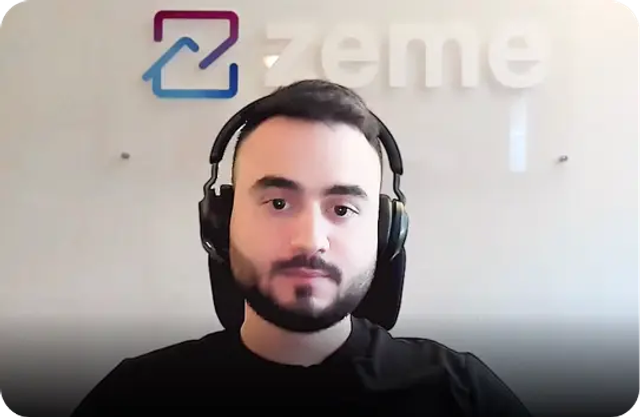
Elior Alayev

We don't just call them Logiciel; they're part of the Zeme team. Within the first week they were contributing meaningfully to our codebase.

Elior Alayev
Elior Alayev
Founder & CEO, Zeme
David Buzzelli

The Logiciel team worked tirelessly and built everything we needed, with security and best practices across our entire platform. It allowed us to become #1 in our industry, and we couldn't have done it without them.

David Buzzelli
David Buzzelli
Co-Founder, JobProgress
Questions

Frequently asked questions.

What is recommendation engine development?

Recommendation engine development involves building systems that analyze user behavior, item information, context, and other signals to rank and recommend relevant products, content, services, features, or actions.

What types of recommendation engines can you build?

Depending on the use case, recommendation engines can use collaborative filtering, content-based methods, similarity models, embeddings, contextual ranking, popularity signals, machine learning, or hybrid approaches.

What data is needed to build a recommendation engine?

Useful data can include clicks, searches, purchases, views, ratings, product or content metadata, user profiles, account information, previous interactions, and contextual signals. The exact requirements depend on the recommendation use case.

Can recommendation engines work with limited user history?

Yes. Cold-start strategies can use item metadata, user context, stated preferences, popularity signals, business rules, and session behavior until enough interaction history becomes available.

Can a recommendation engine follow business rules?

Yes. Recommendation logic can account for availability, eligibility, permissions, inventory, exclusions, priorities, pricing rules, and other constraints before results are shown to users.

Can a recommendation engine integrate with an existing application?

Yes. Recommendation capabilities can be integrated through APIs or other interfaces into SaaS products, ecommerce platforms, marketplaces, mobile apps, portals, search experiences, and internal systems.

How do you measure recommendation engine performance?

Measurement can include ranking quality, relevance, click-through behavior, engagement, conversion, coverage, diversity, novelty, latency, and other product or business outcomes aligned with the use case.

Let's build

Help Every User Find What Matters Next.

Turn behavioral, contextual, and item data into recommendations that make products, content, services, and next actions easier to discover.